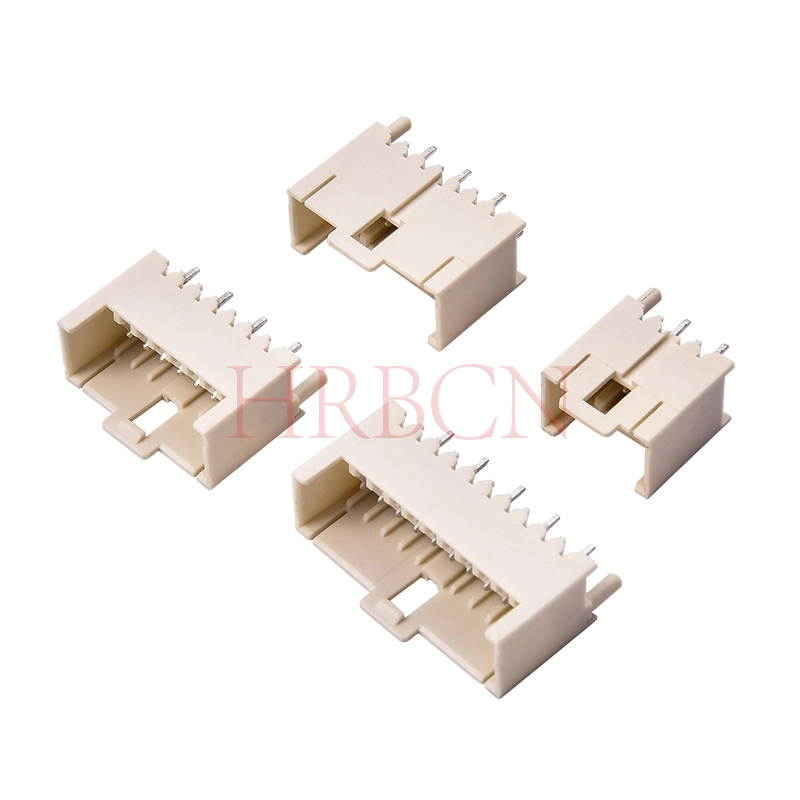
You see many connector types in electronics. It is important to know connector words if you design, buy, or fix devices. Words like wire-to-wire, IDC, RAST, and board-to-board can be confusing. These words can make picking a connector hard. If you know what they mean, you can pick the right connector for your job. HRB&HRBCN Connector gives real-life examples and product types. Here are some common connectors:
Connector Type | Description |
|---|
Metric Circular Connectors | These are waterproof and strong. People use them in factories. |
M12 Circular Connectors | These keep out dust and water. They are used in factory machines. |
M8 Circular Connectors | These are tough. They work in medical tools and strong data loggers. |
Quick-Connect and Bullet Connectors | These connect fast. They are good for car and boat wires. |
Specialized Electrical Connectors | These are made for tough jobs like planes and phone systems. |
Key Takeaways
Wire-to-Wire Connectors Overview
What Is a Wire-to-Wire Connector?
A wire-to-wire connector joins two or more wires. You do not need a circuit board to use it. People use these connectors to fix, extend, or branch cables. The connector keeps the wires together. It lets electricity move safely from one wire to another. Wire-to-wire connectors come in many shapes and sizes. They all help wires connect in a safe way.
Key Features and Applications
Wire-to-wire connectors are flexible and easy to use. Most types do not need special tools. You can connect or disconnect wires fast. This is helpful for repairs or changes. The connector’s material affects how well it works. Here is a table that shows common materials and what they do:
Material Type | Elasticity | Conductivity (IACS) | Cost | Typical Applications |
|---|
Phosphor bronze | Excellent | Moderate (15%-20%) | Medium | Signal connectors, general-purpose wire-to-board connectors |
Brass | Poor | High (28%) | Low | Power terminals, low-cost crimp terminals |
Beryllium copper | Excellent | Moderate (20%-25%) | High | High-end connectors, military, aviation applications |
Phosphor bronze is good for signal connections. It costs less and works well.
Brass is cheap and conducts electricity well. It does not bend back easily, so it is not good for wires you connect often.
Beryllium copper works best for tough jobs. It costs more.
Wire-to-wire connectors are used in many places. Here is a table that shows where you might see them:
Industry | Applications |
|---|
Automotive | Connecting sensors, lights, and control units; must withstand extreme conditions. |
Industrial | Used in machinery, control panels, and automation systems; requires robustness and reliability. |
Consumer Electronics | Internal wiring for devices like smartphones and laptops; needs to be compact and high-performing. |
You use these connectors in cars for sensors and lights. In factories, they connect machines and control panels. In electronics, they fit inside devices where space is small and performance matters. Wire-to-wire connectors make it easy to branch or connect cables.
Pros and Cons
Wire-to-wire connectors have many good points. You can branch cables or connect wires far apart. You can add more connection spots along a cable. This helps with tricky wiring jobs.
But you must secure the connector well. If you do not, it can come loose. These connectors are not strong against pulling or shaking. Here is a table that compares wire-to-wire connectors with wire-to-board connectors:
Connector Type | Advantages | Disadvantages |
|---|
Wire-to-Wire | Supports long-distance branching and multiple points | Requires extra securing; weak positioning and strength |
Wire-to-Board | Compact and highly integrated | Less flexible; must match board positions |
Tip: Always check your cable and where you use it before picking a connector. The right connector keeps your system safe.
Pick a wire-to-wire connector when you need to join cables directly. It is good for places where you need to change or move wires easily. You see these connectors in cars, machines, and home electronics. If you choose the right connector, your cable system will work well and last longer.
IDC Connectors and Technology
What Is an IDC Connector?
When you work with connectors, you may hear insulation displacement contact. An IDC connector lets you join wires without taking off the insulation. The connector has sharp blades that cut through the wire’s cover. This makes a direct connection that blocks air and water. The bond is strong and keeps out moisture. IDC connectors help you finish jobs faster and make fewer mistakes.
How IDC Connectors Work
To use an IDC connector, put the wire in the slot. The blades push down and slice through the insulation. This makes a cold-welded connection. You do not need to strip the wire or use solder. The process is quick and easy. You can connect many wires at once with modular idc systems.
IDC connectors use sharp blades to cut wire insulation and make contact.
Crimp connectors need you to strip wires and connect each one.
Solder connectors need you to melt solder, which takes more time.
IDC connectors help you work faster and save money on labor. You can connect many wires in one step. Soldering and crimping take longer and need more work.
Tip: Pick IDC connectors when you want fast and strong connections for lots of wires.
HRB&HRBCN IDC Connector Features
HRB&HRBCN makes IDC connectors with special features. They last a long time and can handle tough places. The connectors work for over 100 uses. You can use them where there is water, dust, heat, or chemicals. HRB&HRBCN connectors have many safety and quality certificates. You also get good prices and easy ordering.
Feature | HRB&HRBCN Connector | Other Brands |
|---|
Certification | ISO 9001:2008, UL&cUL, TS16949:2009, VDE, TUV | Varies by brand |
Durability | 100+ mating cycles | 30–50 cycles |
Environmental Resistance | High resistance to water, dust, heat, chemicals | Varies by material |
Cost-Effectiveness | Competitive pricing, good availability | Higher prices for some brands |
You can count on HRB&HRBCN connectors for hard jobs. They work well in cars, factories, and hospitals. You get good results and value for your money.
IDC Connector Applications
IDC connectors are in many electronic devices and systems. They fit in small spaces and give strong connections. You use them in car infotainment systems to link screens, controls, and audio. Factories use IDC connectors for machines, sensors, and control units. Hospitals use them to connect sensors and screens for patient care. Phones and tablets use IDC connectors because they are small and reliable.
Device/System | Application of IDC Connectors |
|---|
Car Infotainment System | Connects control unit to screen for pictures and touch. |
| Gives steady audio connections for good sound. |
| Links control modules for smooth use. |
Industrial Equipment | Used in machines to connect sensors, motors, and controls. |
| Built to last in tough places, so they work well. |
Hospital Patient Monitoring | Connects sensors to check patient health. |
| Makes sure screens and devices stay connected. |
| Sets off alarms if a patient’s condition changes. |
Consumer Electronics | Small size fits in phones and tablets. |
| Makes strong connections for tiny parts. |
You see IDC connectors in many rast applications. You use them in modular idc systems for fast and easy wire connections. IDC connectors help you make strong and lasting connections in cars, factories, hospitals, and electronics. You get good performance and long life.
RAST Connector System Explained
What Is a RAST Connector?
You might see the word rast when working with wires. RAST means "Grid Connection Plug Technology." This is German for grid connection plug technology. The rast connector system uses set spaces between contacts. The most common types are rast 2.5 and rast 5. These numbers show how many millimeters are between each contact. You use rast connectors to make wiring harnesses fast and without mistakes. The rast connector system helps you not mess up during assembly. It does this by using keying and polarization.
It is important to know the difference between rast, rast connectors, and the rast connector system. Rast is the rule for spacing. Rast connectors are the real parts you use. The rast connector system includes the connectors, the spacing, and how you put them together. HRB&HRBCN Connector has many rast 2.5 and rast 5 connectors for different jobs.
RAST Connector System Features
The rast connector system gives you lots of good things. You can use fewer different parts in your harnesses. You can change keying and polarization to fit your needs. This helps you keep less inventory and stops plugging mistakes. The latching system makes the connectors stay in place better. You also save money on work because rast connectors work with machines.
Feature | Description |
|---|
Component Variety | Reduces the variety of components in harness assemblies. |
Customization | Allows customization of keying and polarization features. |
Plugging Errors | Reduces plugging errors through polarization. |
Retention | Includes a latching system for improved connector retention and reliability. |
Labor Costs | Lowers labor costs, suitable for automated equipment. |
You find rast 5 connectors in many places because they meet tough safety and quality rules. These rules include VDE, UL 1977, IEC 61984, and ISO 9001:2015. Rast connectors from HRB&HRBCN Connector also meet RoHS and CE Marking rules.
Applications of RAST Connectors
You use rast connectors in many things. Home appliances like freezers, microwaves, and washing machines use rast 5 and rast 2.5 connectors for safe and quick wiring. Cars use the rast connector system for relays, sensors, and switches. Factories use rast connectors to connect PCBs with motor controls and switches.
Home appliances
Automotive
Heating technologies
Industrial applications
Rast connectors were first used in home appliances to stop wiring mistakes. Now, you see rast 5 and rast 2.5 connectors in cars, factories, and heating systems. The rast connector system gives you safe, strong, and good connections that meet all the rules you need.
Board-to-Board Connectors
Board-to-Board Connector Types
You use board-to-board connectors to join two printed circuit boards. These connectors help make small and powerful devices. There are many types. Each type has its own shape and job. The table below shows the main types you might see:
Type | Structure Description | Functionality Description |
|---|
Mezzanine | Stacks two parallel boards with different heights. | Lets you expand modules and use space well. Supports fast data transfer. |
Microminiature | Very small with fine pitches and low stacking heights. | Fits in tiny electronics like wearables and smartphones. Gives reliable connections. |
Hermaphroditic | Mates to itself on both boards. | Makes inventory simple. Gives strong alignment and a solid fit. |
Power and Signal | Combines power and signal paths, handles high current. | Works for mixed needs. Fits many uses, including automotive and industrial. |
High-Speed | Built for fast data rates, up to 56 Gbps. | Used in places where you need high-speed data, like AR/VR and gaming. |
Rugged | Has extra features for tough conditions. | Stays reliable in shock, vibration, and harsh environments, such as automotive and industrial equipment. |
Applications and Benefits
You find board-to-board connectors in lots of new devices. These connectors are important in car electronics. You see them in control units, entertainment systems, and sensor modules. They are also in smartphones, wearables, AR/VR headsets, laptops, and gaming devices. Wearables need connectors that are thin and have small spaces between pins. AR/VR headsets use these connectors for fast data in tight spots. Laptops and tablets use them to link parts together.
You get many good things from board-to-board connectors:
You save space. These connectors let you stack boards and add more features in a small area.
You get better signal quality. The design helps stop power loss, echoes, and signal mix-ups.
You get strong support. The connectors hold boards together, even in cars or factories.
Board-to-board connectors have small gaps between pins, lots of contacts, and low stacking heights. You can use them when you do not have much room. They can also handle high power, which is needed in cars and factories. You can count on these connectors to send power and data where you need it.
Tip: Pick the right board-to-board connector for your car project to get the best space, speed, and strength.
Other Common Connectors
Wire-to-Board Connectors by HRB&HRBCN
Sometimes you need to join wires to a printed circuit board. HRB&HRBCN wire-to-board connectors give you a strong and steady link. These connectors help wires and boards stay connected in many devices. Here are their main features in a table:
Feature | Description |
|---|
Stable Performance | Ensures secure, low-loss electrical transmission across boards and modules. |
Reliable Connection | High-precision contact structures maintain strong signal integrity and prevent faults. |
Established Experience | Over 16 years of manufacturing experience, ensuring proven quality and stable supply. |
Certified Quality & Safety | Compliance with ISO 9001, UL/cUL, and other safety standards for high reliability. |
Rapid Delivery & Flexible Supply | Normal products ship within 3–5 days; custom orders in ~10–15 days for quick assembly. |
You can count on these connectors for cars, factories, and home electronics. HRB&HRBCN ships fast and follows strict safety rules.
Circular Connectors
Circular connectors are easy to spot because they are round and strong. You use them when you need something tough. These connectors work well where dust, water, or shaking can cause trouble. You see them in many places:
Transportation systems
Industrial control panels
Aerospace instrumentation
Medical imaging equipment
Automotive manufacturing
Industrial robotics
Semiconductor manufacturing
Food and beverage processing
You can trust circular connectors for outdoor gear, medical tools, and factory robots. They keep your connections safe and steady, even in hard places.
Modular Connectors
Modular connectors let you build systems that can change. You can add or take away parts as your project grows. These connectors make fixing and upgrading easy. One rectangular connector can hold many wires. This saves space and means you need fewer connectors.
Modular connectors help you design flexible systems.
You can fix or upgrade things fast.
Rectangular connectors save space and keep things tidy.
You often see modular connectors in network and phone equipment. They help you manage wires and keep your systems working well.
Choosing the Right Connector
Key Selection Factors
When you pick a connector for your wire harness, you need to think about some important things. The right connector keeps your harness safe and working well, even in hard places like cars.
Make sure the connector is strong. Your harness might shake, get pulled, or bend. A tough connector will not come loose or break.
Check if it has good sealing. High IP ratings like IP67 or IP68 keep out water, dust, and chemicals.
The connector should handle hot and cold temperatures and hard hits. This is very important for cars and factory harnesses.
See if the connector gives strain relief. This stops the cable from getting hurt where it meets the connector.
Pick a connector that works well, even after you use it many times.
Always make sure the connector fits your harness design. If it matches your system, you can put it together easily and make fewer mistakes.
Tip: If you build lots of harnesses, use connectors that fit your tools and wires. This helps you save money and time.
HRB&HRBCN Connector Solutions
You can trust HRB&HRBCN connectors for your wire harness jobs. They have many products, like fully covered quick disconnect terminals, IDC, and RAST connectors. These work in cars, factories, and home machines.
Certification Type | Description |
|---|
ISO 9001 | Quality management standard |
UL/cUL | Safety for electrical products |
TS16949 | Automotive industry quality management |
TUV/VDE | Safety and quality for global applications |
IEC 60335-1 | Household appliance safety and performance |
HRB&HRBCN connectors pass tough safety and quality tests. You get connectors that meet UL, VDE, and TS16949 rules. This means your harness will work well in hard jobs. The design lets you connect wires fast, safely, and easily. You can pick male or female connectors to fit your harness. These connectors work in cars, factories, and home machines. You get good results and long-lasting quality for every harness you build.
Note: HRB&HRBCN cares about quality, quick shipping, and flexible supply. You can trust these connectors to keep your harness safe and strong.
You can spot big differences between cable-to-cable and cable-to-board connectors. The table below shows how each type is used for different jobs:
Connector Type | Best Use | Voltage Rating | Current Rating |
|---|
Cable-to-cable | Flexible wiring, repairs | High | High |
Cable-to-board | PCB integration | Medium | Medium |
Cable-to-cable connectors are great for fixing wires and handling lots of power. Cable-to-board connectors are better for small spaces and steady voltage. Always check the voltage and current ratings to stay safe. Knowing connector words helps you pick the right one and avoid problems. HRB&HRBCN connectors make your projects work better. If you need more help, read guides or ask an expert.
FAQ
What is the difference between wire-to-wire and wire-to-board connectors?
Wire-to-wire connectors join two cables together. Wire-to-board connectors join a cable to a printed circuit board. You use wire-to-wire connectors when you need flexible wiring. You use wire-to-board connectors for steady connections inside devices.
How do IDC connectors save installation time?
IDC connectors let you connect wires without taking off the insulation. You push the wire into the connector. The sharp blades touch the wire right away. This makes fewer mistakes and helps you finish faster.
Are HRB&HRBCN connectors certified for safety?
Yes. HRB&HRBCN connectors pass ISO 9001, UL/cUL, TS16949, VDE, and TUV tests. You get safe products that follow strict rules for cars, factories, and homes.
Where can you use RAST connectors?
You use RAST connectors in home appliances, cars, and factory machines. These connectors help you build wiring harnesses fast. They stop plugging mistakes and work well with machines.
How do you choose the right connector for your project?
Think about what your project needs. Check if the connector is strong, sealed, and fits your system. Look at the voltage and current ratings. HRB&HRBCN has many safe choices. You can ask their team for help.


