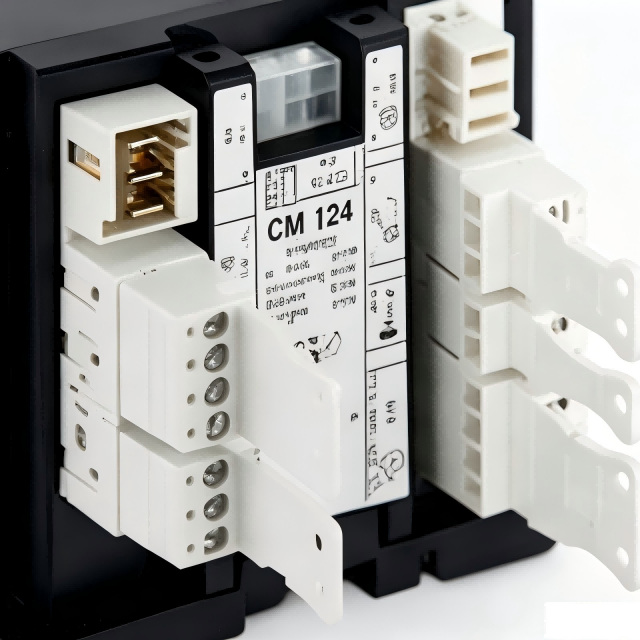
Every day, you use electrical connectors without even noticing them. They work inside your car, your phone charger, and hospital equipment. An electrical connector joins circuits, letting power and data flow between parts. It acts like a bridge for electricity.
Picking the wrong connector can cause system failures, costly downtime, and safety risks. Engineers face many types and standards when making this choice. You need reliable performance in every application.
This article comes from experienced connector engineers. We answer common questions about types, selection, standards, and troubleshooting. You will learn practical, expert-backed advice you can use right away in your projects. Understanding connector selection protects your designs and improves overall reliability.
Key Takeaways
To avoid overheating and failure, pick connector ratings that match your system's voltage and current.
Use IP67 or IP68 connectors in wet or dusty areas to keep out water and grime.
Choose connectors that have strong locks and gold plating for places with lots of shaking or heavy use.
Look for UL, IEC, or MIL-SPEC certifications to make sure the part is safe and works well.
You can stop random connection problems by fixing what causes them, like using the right grease to prevent fretting corrosion.
Understanding the Basics: What Is an Electrical Connector?
Think of an electrical connector like a bridge you can remove anytime. It joins two circuits so power and data can move, but you can take them apart easily for fixing or upgrades. Without it, swapping a broken part would mean unsoldering or cutting wires, which takes time and has risks. This ability to separate is the main feature that makes electrical connectors so important in today's electronics.
An electrical connector is a device that links electrical circuits. It has a gender (male plug and female socket). In computing, it is part of the physical layer in the OSI model.
The Anatomy of a Connector: Plugs, Jacks, and Contacts
Every connector has a plug and a jack. The plug is the male part, and the jack is the female part. When they connect, the contacts inside touch. Contacts are the metal pieces that carry the electrical current. Common materials are copper, gold, silver alloys, and platinum-group metals. Copper is the most used conductor because it costs little and works well. Gold resists corrosion very well but costs more. Silver alloys carry current well but can tarnish. These materials help ensure good current flow and resist rust. The connector body holds everything together and stops electricity from leaking. Different connector types use different shapes and sizes to fit specific jobs. Electrical connectors give a separable link. Connectors come in many shapes and sizes. Different types of connectors serve different uses. Some connectors are made for heavy loads, others for fast data transfer. Many connectors have a locking feature to stop them from coming loose due to shaking. All connectors must give a reliable link.
The separable link gives big advantages. You can replace a bad cable without changing the whole equipment. Testing is easier because you can reach test points without disturbing the main link. You can also change a network easily by adding or removing parts. These features cut downtime and boost reliability. Good connectors stop slow damage from dirt, moisture, and heat. Grounding elbows give a visible ground point, which makes maintenance safer. Capacitive test points let you detect voltage without touching the conductor. This makes your system last longer. Many designs are made for many uses, so you can reuse them.
Key Electrical Ratings for Connectors: Voltage, Current, and Resistance
Electrical connectors have ratings that tell you their safe limits. The voltage rating says how much electrical pressure the insulation can handle. This rating depends on the insulation material and the space between contacts. Going over this rating can cause sparks and failure. The current rating shows the maximum power the contacts can carry without getting too hot. This rating is limited by the contact size and material, and how well it gives off heat. Higher current needs larger contacts or better materials. Contact resistance is how much the current flow slows at the point where contacts meet. It is affected by contact force, plating material, and how clean the surface is. Low resistance is very important for clear signals and good power flow. Even a small rise in resistance can cause signal loss or overheating. Using a connector beyond its current rating can cause overheating, which might melt the insulation and start a fire.
When you pick connectors, you must match these ratings to your job. For example, a connector for power needs a high current rating, while a connector for data needs low contact resistance to keep the signal clear. Different connector types give different performance levels. Power connectors usually have bigger contacts. Always check the datasheet for voltage, current, and resistance specs. This makes sure your link stays reliable over time. Knowing these ratings helps you choose the right electrical connectors for your project. This know-how makes your whole system work better. Paying attention to these ratings helps you avoid failures and keeps things working for a long time.
A Guide to Electrical Connectors by Application
Electrical connectors fit into three main groups. These are wire-to-wire, wire-to-board, and board-to-board. Each kind fixes a different wiring issue. Your pick depends on how you move power, signals, or data in your system. Knowing these connector types helps you avoid wrong choices. A connector failure can halt your whole project.
Wire-to-Wire and Wire-to-Board Connectors for Power and Signal
Wire-to-wire connectors link two cables. These connectors make a lasting connection between wires. You find them in cars, phones, TVs, and factory machines. Wire-to-board connectors attach a wire to a printed circuit board (PCB). They let you wire a PCB in flexible ways. Common uses are in home electronics, kitchen appliances, and factories. HRB&HRBCN Connector sells wire-to-wire connectors with pitch sizes from 3.0 mm to 10.0 mm. These work for both low-signal and high-power needs. For wire-to-board, pitch sizes go from 0.8 mm to 6.2 mm. Smaller pitches, like 0.5 mm, fit phone screens. Larger pitches, like 5.08 mm, handle power terminals. When you need to send power, pick a larger pitch and strong contacts. For signals only, a smaller pitch works well. USB connectors and RJ45 connectors are common wire-to-board types. They keep signal quality for reliable data transfer. Different connector types are for different uses. Common USB connectors also show up in factories for data logging.
Specialized Connectors for Harsh Environments: Waterproof and Industrial Types
Some uses need connectors that fight water, dust, and shaking. For outdoor use, you need an IP67 rating. This rating stops dust from getting in and protects against short dips in water. Waterproof types use sealed rubber parts and locks. They operate from -55°C to +85°C. Contact resistance stays under 10 milliohms. These connectors are good for electric cars, outdoor lights, and factory robots. Board-to-board connectors also work in tough industries. Industries like cars, planes, hospitals, and phones rely on them. They handle fast data and steady power. More demand from electric cars, AI servers, and 5G pushes new ideas. You must pick the right connector for your setting. A waterproof connector in a dry indoor panel wastes cash. A standard connector in a wet outdoor spot fails fast. Knowing these special connector types protects your money. Your system needs reliable data flow and steady power.
How to Choose the Right Connector for Your Applications
Picking the right connector for your project means balancing electrical, mechanical, and environmental factors. You cannot focus on just one area. A connector that works perfectly indoors may fail quickly outdoors. A connector with excellent electrical ratings may loosen under constant vibration. Your choice must match every condition your system will face.
Evaluating Environmental Factors: IP Ratings and Temperature Ranges
The environment where your connector operates determines many of your choices. Water, dust, chemicals, and temperature extremes all affect connector performance. You need to know exactly what conditions your application will encounter.
IP ratings tell you how well a connector resists dust and water. The first digit shows dust protection. The second digit shows water protection. An IP67 rating means complete dust protection and protection against temporary immersion in water up to 1 meter for 30 minutes. An IP68 rating goes further, allowing continuous immersion beyond 1 meter. The table below shows the key differences.
Feature | IP67 Connectors | IP68 Connectors |
Water Protection | Temporary immersion up to 1 meter for 30 minutes | Continuous immersion beyond 1 meter |
Dust Protection | Complete dust protection (Level 6) | Complete dust protection (Level 6) |
Cost | More affordable than IP68 | Generally more expensive due to advanced sealing |
Common Uses | Outdoor lighting, rain-exposed electronics | Underwater cameras, submersible pumps |
Think about a smartphone with an IP67 rating. It can survive a brief drop into a shallow puddle. Prolonged submersion might cause issues. An IP68-rated diving watch handles being submerged for a long time without problems. Your application determines which rating you need.
Temperature range also matters. HRB&HRBCN waterproof connectors operate from -55°C to +85°C. This range covers most outdoor and industrial applications. If your system operates near engines or furnaces, you need connectors rated for higher temperatures. Always check the datasheet for the operating temperature range before you buy.
Mechanical Considerations: Mating Cycles, Locking Mechanisms, and Materials
Mechanical factors affect how long your connector lasts and how reliably it performs. Mating cycles, locking mechanisms, and materials all play important roles.
Mating cycles refer to how many times you can connect and disconnect a connector before it wears out. Different connector types have different ratings. Sub-d and M-type connectors handle up to 750 mating cycles. Military-grade connectors like the MIL-DTL-38999 Series III last for 1,500 cycles. Some miniature military connectors reach 2,000+ cycles. Push-pull connectors can handle 5,000+ cycles. For high-vibration applications, target connectors rated for 1,000+ mating cycles, verified per IEC 60512 or MIL-DTL test methods.
Locking mechanisms prevent accidental disconnection. Several options exist:
Threaded couplings require multiple turns to secure. They provide strong connections but take time to engage.
Bayonet locks use a push-and-twist quarter-turn motion. They connect quickly and resist loosening from vibration.
Quarter-turn locks offer fast installation and reliable locking.
Spring-cage and push-in terminals maintain constant force against the conductor, automatically adjusting to wire deformation and thermal expansion.
Bayonet locks offer distinct advantages over threaded couplings. They provide rapid connection and disconnection, which matters in time-sensitive operations. They resist accidental disengagement even in moderate vibration. They require minimal physical force, reducing operator fatigue during repeated use. The tactile feedback confirms a secure connection.
Materials also affect connector selection. Nickel-plated brass shells provide abrasion resistance and consistent electrical contact. They also offer EMI shielding. Larger contact cross-sections help lower resistance and prevent heat buildup in high-current applications. For power delivery, choose connectors with robust housings and terminals designed for higher current capacity.
Your connector selection directly impacts system reliability and performance. A well-chosen connector ensures stable signal transmission and reliable data transfer. A poor choice leads to downtime, maintenance costs, and potential safety hazards. Take time to evaluate every factor before making your decision.
Navigating Industry Standards and Compliance for Connectors
Standards exist to protect you, your equipment, and your end users. They define safety limits, performance benchmarks, and testing methods. When you choose connectors that meet recognized standards, you gain confidence in their reliability and interoperability. You also simplify global trade because certified parts satisfy regulatory requirements across many markets. Ignoring standards can lead to product failures, legal issues, and damaged reputations.
Common Standards: UL, IEC, and MIL-SPEC Explained
UL standards come from Underwriters Laboratories, a safety science company. These standards focus on fire and electrical hazards. For electrical connectors, UL 1977 covers component connectors used in data, signal, control, and power applications. Other important UL standards include UL 486A-486B for wire connectors and UL 310 for quick-connect terminals. The table below shows common UL standards you may encounter.
Standard | Application |
UL 486A-486B | Wire Connectors |
UL 486C | Splicing Wire Connectors |
UL 486D | Sealed Wire Connector Systems |
UL 486E | Equipment Wiring Terminals – Component |
UL 486F | Bare and Covered Ferrules |
UL 486G | Sealed Twist-on Connecting Devices |
UL 310 | Electrical Quick-Connect Terminals |
UL 1059 | Terminal Blocks |
UL 1682 | Plugs, Receptacles, and Cable Connectors of the Pin and Sleeve Type |
UL 2238 | Cable Assemblies and Fittings for Industrial Control and Signal Distribution |
UL 2237 | Multipoint Interconnection Power Cable Assemblies for Industrial Machinery |
UL 1977 | Component Connectors (also listed) |
IEC standards serve international markets. The IEC 60603-7 series defines 8-way modular connectors. Sub-part 60603-7-5 covers shielded Cat6 connectors, while 60603-7-7 addresses shielded Cat6A connectors. These standards ensure consistent data transmission performance across different manufacturers.
MIL-SPEC standards apply to military and aerospace applications. The MIL-DTL-38999 family supports multi-gigabit transmission rates and mixed-media formats. Series III uses triple-start threads that prevent accidental disconnection under vibration. These connectors handle extreme temperatures from -65°C to +175°C.
HRB&HRBCN Connector holds UL, VDE, TUV, and TS16949 certifications. This means our products meet global requirements for safety and performance. When you select certified connectors, you reduce design risk and speed up your approval process.
Environmental Compliance: RoHS and REACH in Connector Manufacturing
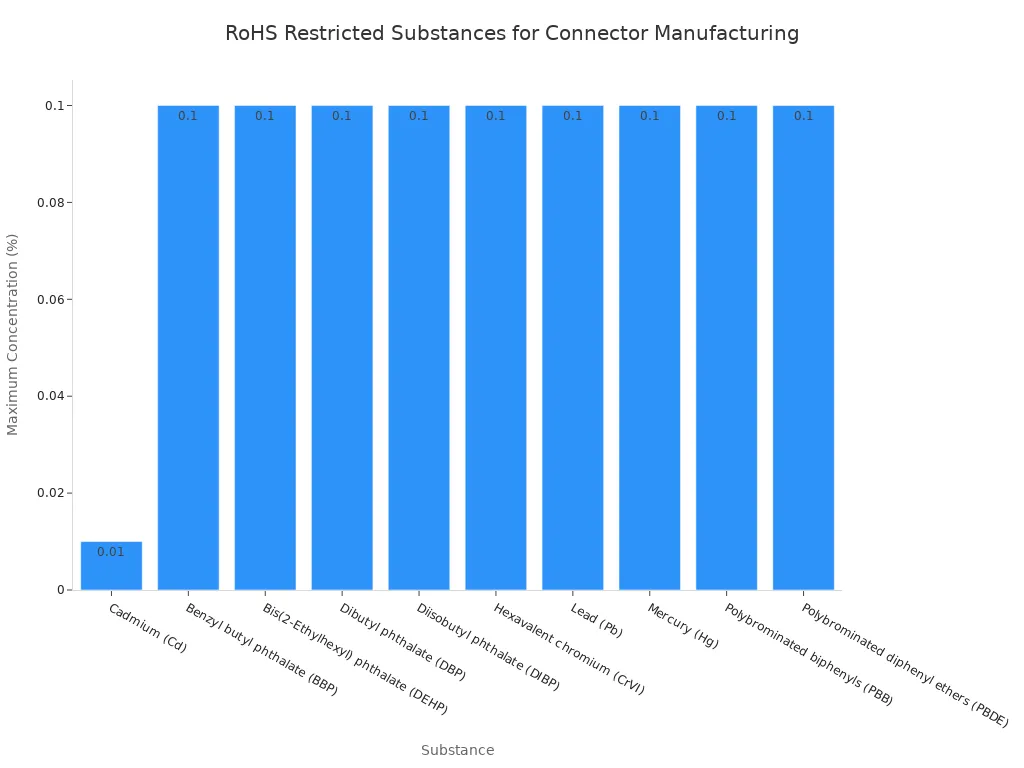
Environmental regulations shape how manufacturers build connectors today. RoHS restricts hazardous substances in electrical and electronic equipment. The directive limits lead, mercury, cadmium, and other materials. Cadmium has the strictest limit at 0.01% by weight. All other restricted substances allow 0.1% concentration.
REACH regulation requires companies to register chemical substances with the European Chemicals Agency. This applies to all products sold in the EU, including electrical connectors. You must maintain documentation proving compliance for every material in your connector. The ECHA updates its restricted substances list regularly, so manufacturers must monitor changes continuously.
Non-compliant connectors can cause supply chain disruptions and fines. In France, penalties can reach €15,000. You also risk product bans and loss of customer trust. Surface finishes must comply with both REACH and RoHS standards. When you choose connectors from certified manufacturers, you protect your supply chain and your reputation.
Troubleshooting Common Connector Problems and Solutions
Even well-designed systems can have connector failures. You need to know what goes wrong and how to fix it. Most problems fall into two groups: damage from the environment and wear from use. Knowing these failure types helps you avoid costly downtime.
Dealing with Corrosion, Contamination, and Moisture Ingress
Corrosion attacks metal contacts when moisture and dirt mix. Water creates paths for oxidation. Dirt and chemicals make the damage worse. You must shield your connections from these dangers.
Among the most common and impactful failure mechanisms in vehicles are fretting corrosion, water ingress, and thermal stress.
Fretting corrosion needs special attention. It happens when tiny movements between contacts rub away the protective plating. This exposes fresh metal to oxidation. The oxide layer builds up and raises contact resistance. You might not see this damage, but it weakens performance over time.
Many engineers worry about salt spray testing. The truth surprises them.
The main failure mechanism for tin-plated contacts is fretting corrosion, not salt spray. The salt spray test has no relationship with this failure mechanism. Even if the oxide layer turns black after salt spray, in practice the matching terminal can easily remove the oxide layer and contact the pure tin inside, forming a reliable connection. Salt spray tests have no acceleration factor, and passing 48 hours of salt spray does not indicate actual product lifespan.
HRB&HRBCN waterproof connectors use sealed rubber parts and housing-to-terminal locks. These features block moisture and dust. Tin-plated contacts resist corrosion while keeping good conductivity. For harsh places, pick connectors with IP67 ratings. They work from -55°C to +85°C and keep contact resistance under 10 milliohms.
Preventing Intermittent Connections and Contact Wear
Intermittent connections frustrate technicians because they come and go. A 2012 Chevrolet Sonic showed this problem clearly. The car had intermittent no-crank, erratic lighting, and transmission issues. Wiggling the ECM connector X1 harness briefly restored engine start. Inspection revealed a damaged Connector Positive Assurance clip and an unsecured harness. The technician suspected terminal fretting worsened by harness movement. Light terminal cleaning, connector grease, and securing the harness fixed the problem for good.
This case shows how micro-motion creates oxidation and intermittent failures. You must fix the root cause, not just the symptom.
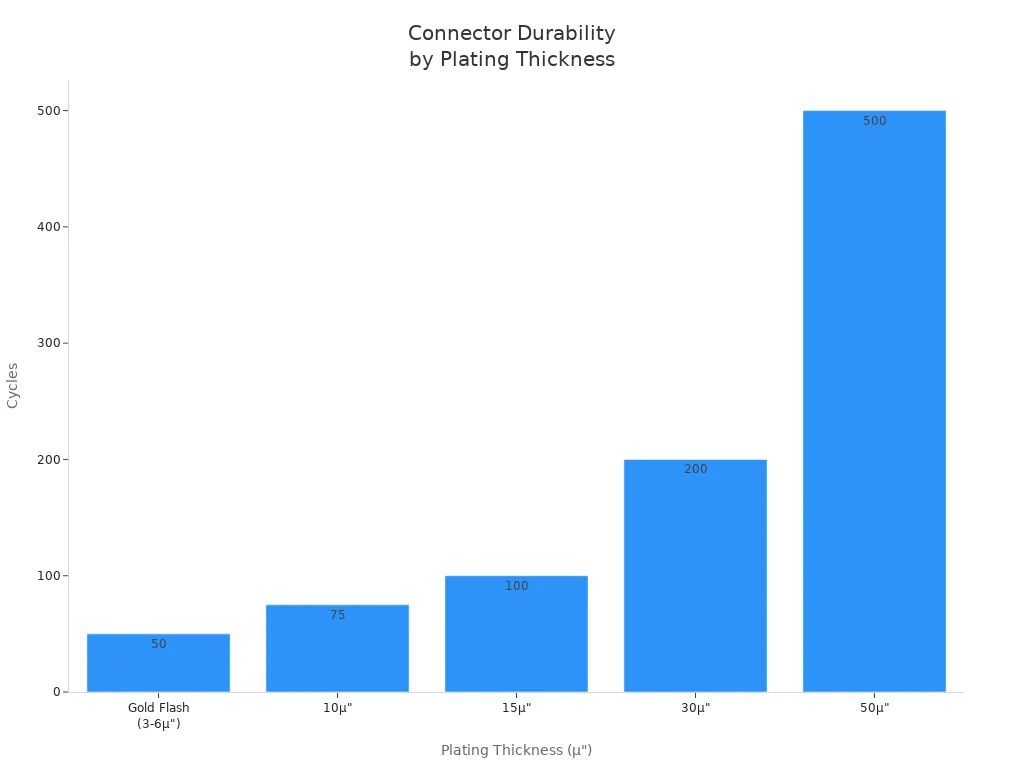
Contact wear matters for high-cycle uses. Gold plating thickness directly affects how many mating cycles your connectors survive.
Best Practice | Specific Recommendation | Supporting Data |
Specify high-durability finishes | Use gold plating with a hard nickel underplate | Gold Flash (3-6µ"): 50 cycles; 10µ": 75 cycles; 15µ": 100 cycles; 30µ": 200 cycles; 50µ": 500 cycles |
Design for the duty cycle | Accurately assess usage frequency to guide material and finish selection | Cycle count directly influences pin material and finish recommendations |
Test for endurance | Conduct cycle testing to identify early wear signs | Testing helps optimize pin design before full production |
You should match plating thickness to your real usage frequency. A connector you mate once during assembly needs less gold than one you plug and unplug daily. Testing your design early prevents field failures. Reliable connectors cut maintenance costs and keep your systems running.
You now understand how electrical connectors work. You know the types, ratings, and standards that are important. This knowledge keeps your projects from failing.
When choosing connectors, look beyond the price. A cheap part that fails costs more than a good one that lasts. Think about reliability, lifespan, and overall cost. Your choice directly affects system performance and safety.
Always check datasheets before buying. If uncertain, ask manufacturers or engineers for help. They can help you match connectors to your specific applications.
Learn these basics to make good choices. You will decide on power, data, and connection quality. Your projects will run better and last longer. Good connector choice now stops expensive problems later.
FAQ
Here are answers to common questions about electrical connectors. These FAQs cover selection, ratings, and maintenance for different types of connectors.
What is the difference between IP67 and IP68 connectors?
IP67 connectors can handle short dips in water up to 1 meter. IP68 connectors can stay underwater beyond 1 meter. Both types keep out dust completely. Pick the right connectors based on how much water they will face.
How do I select connectors for high-power applications?
For power needs, pick connectors with larger pitch sizes and strong contacts. Check the current rating on the datasheet. HRB&HRBCN connectors support power delivery with pitches from 6.35 mm to 10.0 mm.
What common standards apply to electrical connectors?
Common standards include UL 1977 for component connectors and IEC 60603-7 for modular connectors. These connector standards ensure safety, performance, and reliability across different manufacturers.
How do I prevent corrosion in connectors?
Choose connectors with sealed housings and tin-plated contacts. Use IP67-rated connectors for wet environments. Apply connector grease to protect contacts. Regular inspection helps catch early wear.
What are USB connectors and when should I use them?
USB connectors are common wire-to-board connectors for data transfer and power delivery. They work in electronics, industrial equipment, and data logging. They provide reliable connections for signal and power.


