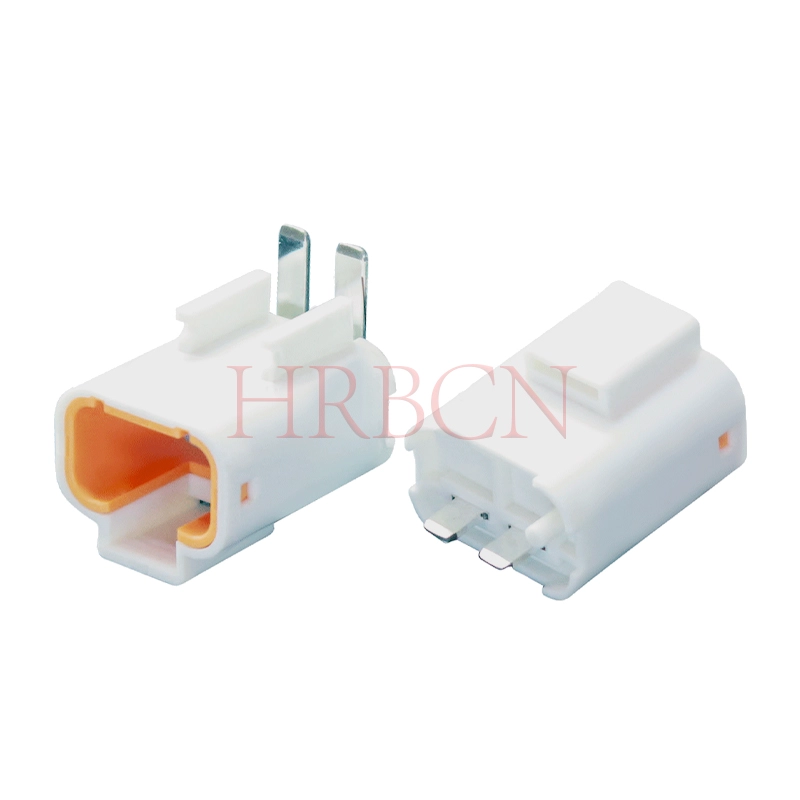
You pick the right connector for industrial automation by knowing what you need. The connector type should match the job you want to do. Check these important things:
connector type
coding
pin count
mounting
environment
materials
standards
You make sure things work well by picking connectors that fit your needs. HRB&HRBCN Connector gives good solutions for industrial automation and projects.
Key Takeaways
Pick the connector type that fits your automation needs. This helps your system work well.
Think about things like temperature and humidity when you choose connectors. This stops problems from happening.
Make sure the connector's electrical and mechanical details match your system. This keeps your system safe and working right.
Find connectors with high IP ratings for tough or outdoor places. These keep out dust and water.
Always check that connectors follow industry rules and certifications. This makes sure they are safe and good quality.
Connector Types for Industrial Automation
You need the right connector so your automation system works well. HRB&HRBCN Connector has many connectors for industrial automation. These connectors help you make systems that are safe and work well.
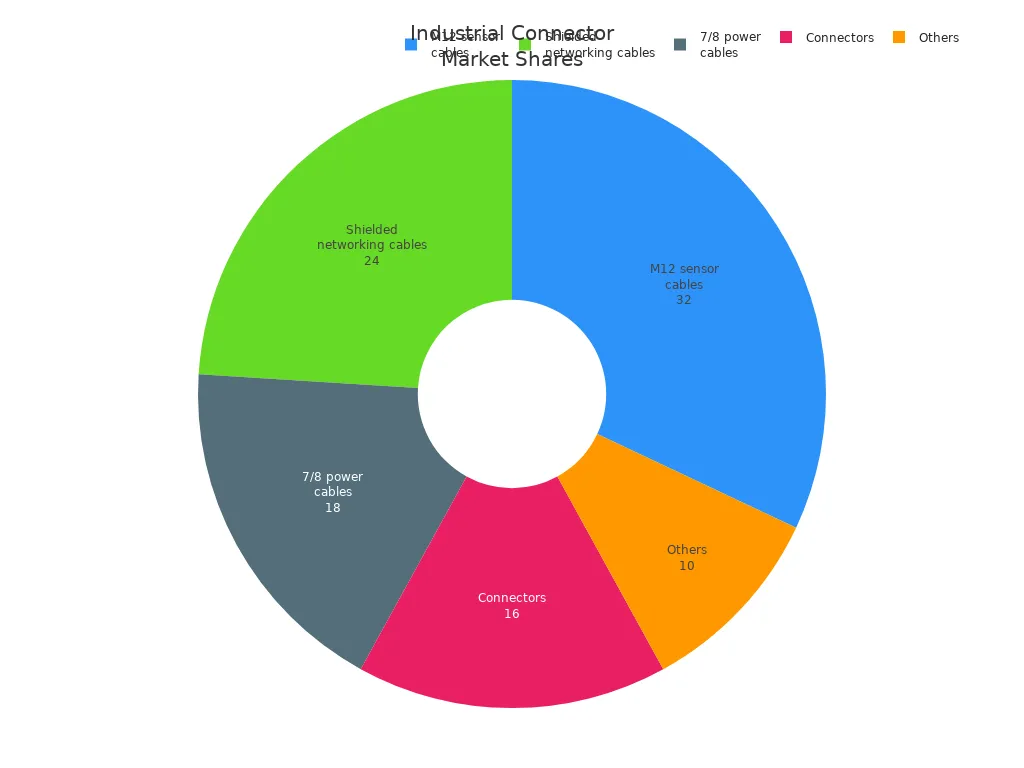
Connector Type | Market Share (%) |
M12 sensor cables | 32 |
Shielded networking cables | 24 |
7/8 power cables | 18 |
Connectors | 16 |
Others | 10 |
Wire to Wire Connectors
Wire to wire connectors join two wires together. You see them in many automation systems. They work well when things shake or get hot and cold. You find these connectors in control panels, PLCs, HMIs, and industrial computers. They help keep your system safe and steady.
RJ45 connectors for Ethernet networks
Connectors for programmable logic controllers
Connectors for human-machine interfaces
Connectors for industrial computers
Wire to Board Connectors
Wire to board connectors connect wires to printed circuit boards. You see these in machines and control panels. These connectors give a clear spot to connect wires. They help stop wiring mistakes and make it easy to change boards or cables.
Advantage | Description |
Clear termination point | Makes installation simple for electricians |
Reduced wiring errors | Lowers mistakes compared to direct soldering |
Easy replacement | Lets you swap boards or cables quickly |
IDC Connectors
IDC connectors use insulation displacement to connect wires. You do not have to strip the wires first. This saves time and makes work cost less. IDC connectors are important in factories because they make building things fast and easy.
IDC cable connectors can save a lot of time when you have many cables to put together. You do not need to strip wires, and the tools are simple.
Rast Connectors
Rast connectors are good for automated production lines. You can add them easily. These connectors help save money on labor and make things more reliable. Polarization and latching help stop plugging mistakes. You can also change them to fit what you need.
Feature | Description |
Easy integration | Fits into automated production lines |
Reduced labor costs | More efficient than crimp-style contacts |
Improved reliability | Polarization and latching reduce errors and improve retention |
Customization options | Keying and polarization can be tailored to your application |
Waterproof Connectors
Waterproof connectors keep dust and water out of your connections. You use them outside or in tough places. The IP rating tells you how much they protect. Some common ratings are IP50, IP66, IP67, and IP68. These connectors help your system work even in hard conditions.
You can count on HRB&HRBCN Connector for strong waterproof connectors that meet high standards.
Key Criteria for Selecting Connectors
When you pick a connector, you need to look at some important things. You want your connectors to work well and last a long time. They also need to follow safety rules. Here is how you can check each thing before you choose.
Electrical and Mechanical Specs
You must match the connector’s electrical specs to your system. If you pick the wrong specs, your system might get too hot or stop working. You could lose signals or even break your system. Use this table to check the most important electrical specs:
Specification | Description |
Voltage Requirements | The highest voltage the connector can take without breaking. |
Current Requirements | The most current the connector can carry safely. |
Resistance | The connector’s resistance, which affects how it works and heats up. |
Maximum Current Capacity | The most current the connector can handle without damage. |
Maximum Voltage Capacity | The most voltage the connector can take. |
Inrush Current | The first big surge of current when you turn it on. |
Characteristic Impedance | The impedance the connector gives to the circuit, which matters for signals. |
Voltage Standing Wave Ratio (VSWR) | Shows how well RF power moves through the connector. |
Insertion Loss | The signal power lost when you add the connector to a line. |
Shielding Effectiveness | How well the connector blocks electromagnetic interference. |
Mechanical specs are just as important as electrical ones. You should check how many times you can plug and unplug the connector. This is called the mating cycle rating. If you use a connector more than its rating, it might not work right. It could get more resistance or even break. Heavy-duty connectors are best if you need to plug and unplug them a lot.
Tip: Pick a connector with a higher mating cycle rating if you will connect and disconnect it often.
Environmental Factors
Connectors in factories face tough places. You need to think about temperature, humidity, and pressure. These things can change how your connectors work. Use this table to see what to watch for:
Environmental Factor | Effect on Connector Performance |
Ambient Temperature | High heat can hurt materials, lower insulation, and cause metal parts to rust. |
Humidity | Lots of moisture can cause breakdowns, rust, and change the connector’s shape. |
Sudden Temperature Changes | Fast changes in temperature can crack or break the insulation. |
Atmospheric Pressure | Low pressure high up can make plastics give off gas, lower voltage resistance, and cause problems. |
You should also check the temperature range for your connectors. Many connectors for factories work from -40°C to 130°C. If your place is colder or hotter, pick a connector that can handle it.
Material and Durability
The connector’s materials matter for how long it lasts and how well it works. You want materials that do not rust, wear out, or get hurt by chemicals. Here are some good choices:
Material Type | Properties |
Metals | Stainless steel, aluminum, brass - strong and do not rust easily |
High-performance Polymers | PEEK, PTFE - great against chemicals and very strong |
Rubber and Silicone | Flexible and good for sealing to keep things out and last longer |
If your connector faces lots of moisture, salt, or harsh chemicals, you need these materials. The right material keeps your system working and stops breakdowns. Picking the right material helps your connector last longer. It keeps your system safe and working well.
Standards and Certifications
You should always check if your connectors meet world standards. Certifications show your connectors are safe and work well. Here are some important standards:
Standard/Organization | Description |
ISO | Makes world standards for many industries, like environmental management (ISO 14000). |
NEMA | Sets rules for electrical equipment, like NEMA TS-2 for traffic signals. |
ODVA | Sets standards for industrial automation like EtherNet/IP and DeviceNet. |
PROFIBUS Nutzerorganisation (PNO) | Manages standards for PROFINET and PROFIBUS, making sure things work together. |
UL | Makes safety rules, like UL 60950-1 for telecom equipment. |
CE Marking | Shows the product follows European rules, needed for selling in Europe. |
DNV GL Certification | Makes sure products meet special rules, especially for ships and energy. |
HRB&HRBCN Connector products have certifications like ISO 9001:2008, UL&cUL, TS16949:2009, VDE, and TUV. These mean you get connectors that follow strict quality and safety rules. You can trust these connectors for your factory needs.
Note: Always ask for certification papers when you buy connectors. This helps you avoid safety and rule problems.
By checking these key things, you make sure your connectors will work well, last long, and keep your system safe.
M12 Connectors in Industrial Automation
M12 Connector Applications
You can find m12 connectors in many factories. These connectors are important for sensors and actuators. They are small, so you can put them in tight spots. Their tough design helps them handle bumps, shaking, and rough places. You use m12 connector types to send signals and power without problems. The screw lock keeps the connection tight, so it does not come loose by accident.
M12 connectors are used in lots of factory jobs. You connect sensors and actuators with them. They also work with industrial Ethernet, Profibus, and Fieldbus systems. Some m12 connectors are sealed to keep out dust and water. This makes them good for hard places. You can set up and fix things faster because m12 connectors are simple to put in and take out.
Application Type | Description |
Industrial Automation | Used for sensor connections and actuator control |
Industrial Ethernet | Supports communication in networked systems |
Profibus and Fieldbus | Handles data transmission in automation systems |
HRB&HRBCN Connector has many kinds of m12 connector types. You can pick from different m12 coding types and pin setups to fit your job. Their connectors follow strict rules, so you know they will work well every time.
Selecting the Right M12 Connector
To pick the right m12 connector, you need to know what you need it for. You should learn about the m12 connector codes and pin-out. Each code does a special job. Some common m12 codes are A, B, C, D, and X. You use m12 a-coded connectors for sensors and DC power. M12 b-coded connectors are for signals and data. M12 c-coded connectors are for AC power. M12 d-coded connectors are for 100 Mbit Ethernet. M12 x-coded connectors are for fast Ethernet up to 10 Gbit/s.
M12 Code | Functionality | Common Applications |
A-Coded | General-purpose sensors, DC power, signal connections | Industrial I/O modules, sensors, LED field devices |
B-Coded | Signal/data communication | Industrial networks like Profibus and Interbus |
C-Coded | AC power transmission | Actuators, AC-powered motors |
D-Coded | 100 Mbit Ethernet communication | Factory automation networks |
X-Coded | High-speed Ethernet (up to 10 Gbit/s) | High-res imaging, IIoT, SCADA systems |
You have to check the m12 connector pin-out and coding before you choose. HRB&HRBCN Connector gives you lots of choices for m12 connectors. Their products help you make strong sensor networks and automation systems. You get connectors that last long and work well in factories.
Tip: Always pick the m12 connector type and code that matches your job for the best results.
Step-by-Step Connector Selection
Picking the right connector for your automation project takes careful steps. You need to follow a plan so your system works well and lasts longer.
Define Application Needs
First, figure out what your system needs. Use this checklist to help you:
Write down the voltage and current needed for each contact.
Think about how strong the connection must be, especially if you use m12 connectors in tough places.
Decide if you need small connectors for tight spots or small m12 uses.
Make sure the cables and parts fit your connector.
Ask how long it takes to get your parts, especially if you want special connectors.
Get help from engineers for design and testing. HRB&HRBCN Connector can help with m12 connectors and other types.
For example, if you use m12 connectors for sensors, you need to know the voltage, current, and space you have.
Match Specifications
Next, check if your connector fits your system’s needs. Use this table to compare:
Aspect | Description |
Mechanical Strain | Make sure m12 connectors can handle shaking and pulling. |
Retention Mechanism | Look for strong locks, like the screw-lock on m12 connectors. |
Environmental Stressors | Pick m12 connectors that block dust, water, and big temperature changes. |
Material Compatibility | Check that all materials in your m12 setup work well together. |
HRB&HRBCN Connector has m12 connectors with strong locks and seals. These are good for tough jobs.
Assess Compatibility
You need to make sure your m12 connectors fit your system. Problems can happen if pins do not match, if the male and female parts are wrong, or if the wiring is tricky. Some tools can help you check if your m12 setup matches your power and signal needs. Always check that your m12 connectors follow the right rules for your job.
Plan for Maintenance
Think about how you will take care of your m12 connectors. Look for these things:
Your m12 connectors should handle heat and chemicals.
Cables should bend and last a long time if they move a lot.
Locks should keep the connectors from coming apart by accident.
The IP rating should protect against dust and water.
For example, HRB&HRBCN Connector’s m12 connectors with IP67 ratings are good for outside or wet places. This helps you save time and money on repairs.
Tip: Check your m12 connectors often for damage, rust, or loose parts. This keeps your automation system working well.
Use Cases and Industry Solutions
Industrial Automation Examples
HRB&HRBCN Connector products are used in many factory jobs. In EV battery factories, you need connectors for testing. These connectors help you get the right measurements. The test connector has a latch that locks it in place. This makes sure it fits tightly with the device you are testing. If you use a bad connector, it might get stuck or give wrong results. You can stop these problems by choosing good connectors from HRB&HRBCN Connector.
You get tight fits for testing.
You stop mistakes and stuck parts.
You make your factory safer and faster.
Automotive and Outdoor Applications
Automotive and outdoor work can be very tough. HRB&HRBCN Connector has strong connectors for these jobs. These connectors can handle shaking, dust, and water. They keep your machines working in bad weather. You use them for big vehicles and outdoor machines.
Strong connectors help electric vehicles.
Tough connectors work well outside.
You can put them in fast and keep things safe.
Tip: Pick connectors with IP67 or higher for cars and outdoor jobs. This keeps water and dust out of your machines.
Smart Home and Medical Solutions
Smart homes and medical devices need special connectors. These jobs need steady data and power. HRB&HRBCN Connector has the right products for this. You use M12 connectors in medical machines and monitors. These connectors help send data and keep things working.
Application Type | Connector Type | Description |
Medical Technology | M12 Connectors | Used in imaging machines and patient monitors for good data. |
You can trust HRB&HRBCN Connector to meet strict rules. Your smart home and medical devices stay safe and work well.
You can pick the right connector by using good industry rules. Look at ampacity, structure size, impedance matching, shielding, and reliability.
Best Practice | Description |
Ampacity | Make sure the connector handles the right current and voltage. |
Structure size | Check if the connector fits your space and is easy to install. |
Reliability | Pick designs that are strong and last a long time. |
Pick certified brands like HRB&HRBCN Connector. This helps you avoid failed checks and expensive fixes. Use this checklist:
Look at your choices often because technology changes fast.
FAQ
What is the most important factor when choosing a connector?
You need to pick a connector that fits your job. First, check the voltage and current you need. Also, think about where you will use the connector. Make sure it follows all safety and quality rules.
How do I know if a connector is waterproof?
Check the connector for its IP rating. For example, IP67 means dust cannot get in and it can be in water for a short time. Always read the product datasheet to be sure.
Can I use the same connector for power and data?
Do not use one connector for both unless the maker says it is okay. Mixing power and data can cause problems or even break things. Always follow what the product guide says.
How often should I inspect connectors in my system?
Check your connectors at least two times a year. Look for any damage, rust, or loose parts. Checking often helps you stop problems before they happen.
Where can I get technical support for HRB&HRBCN Connector products?
You can get help from HRB&HRBCN Connector by email or phone. Go to their official website to find contact info and more help.


