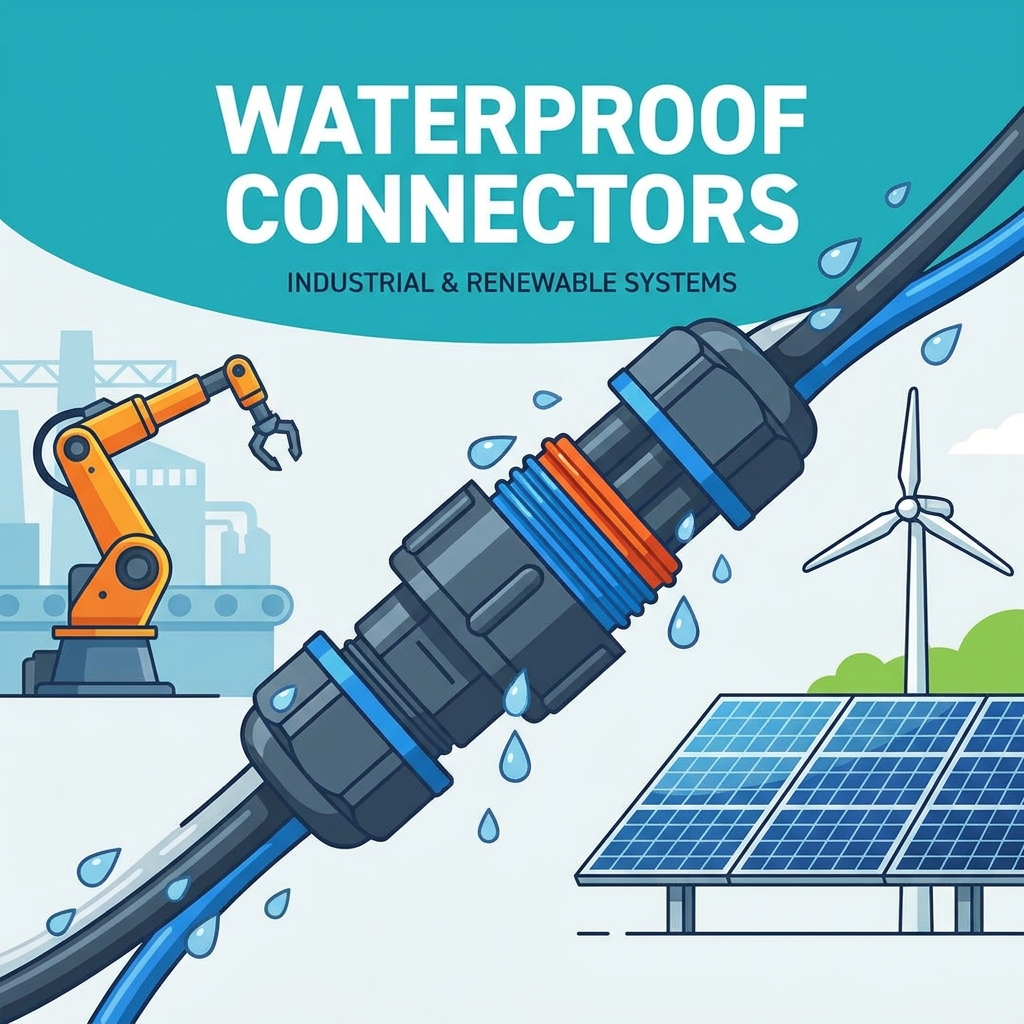
Environmental ingress in mission-critical systems causes unexpected downtime, short circuits, and catastrophic equipment failures. Standard interconnects simply cannot withstand the moisture, dust, chemical washdowns, and thermal stress inherent in industrial automation facilities. Outdoor renewable energy deployments face similar, often harsher, environmental threats like continuous UV exposure and salt spray. Selecting a reliable Waterproof connector requires moving beyond basic marketing claims. You must rigorously evaluate Ingress Protection (IP) ratings, material science, and mechanical locking mechanisms against specific application environments. Relying on assumptions leads to under-specified components and premature field failures. We will explore how to specify the right interconnects to maintain continuous operation under extreme environmental loads, ensuring your power and data lines remain secure regardless of external conditions.
IP Ratings are Contextual: IP67, IP68, and IP69K serve entirely different operational realities; assuming a higher number is universally better can lead to over-specification or failure.
Waterproof vs. Water-Resistant: True impermeability requires specific engineering; understanding the threshold between splash-resistant and fully submersible is critical for system longevity.
Material Compatibility is Critical: The housing and sealing materials (e.g., EPDM, FKM, specialized polymers) must be matched to environmental threats like UV exposure, salt spray, or harsh cleaning chemicals.
Mechanical Integrity Equals Seal Integrity: Vibration and thermal cycling can compromise a waterproof seal if the locking mechanism (threaded, bayonet, push-pull) is not specified correctly.
Why Standard Connectors Fail in Harsh Environments
Waterproof vs. Water-Resistant in Industrial Contexts
Many engineers confuse water resistance with true waterproofing. A water-resistant component repels surface moisture. It might survive a light splash or brief condensation. It will fail under sustained pressure. A true Waterproof connector remains fully impermeable under pressure and submersion. It utilizes compressed O-rings, tight mechanical tolerances, and specialized potting. This distinction dictates system survival. Using a water-resistant plug in a submersible application guarantees failure. Capillary action will eventually draw water down the cable jacket. This moisture reaches the contact pins, initiating rapid corrosion. You must look at the specific design of the mating interface. Does it rely on a simple friction fit, or does it use a mechanical thread to compress a radial seal? Radial seals provide superior protection because they maintain compression even if the cable flexes. Face seals often fail when lateral force is applied to the cable assembly.
The True Cost of Ingress
Moisture ingress creates cascading failures across automation and renewable systems. Water acts as a conductor. When it bridges electrical contacts, it causes power arcing. This arcing destroys the physical pins and melts the surrounding plastic housing. In low-voltage sensor networks, moisture causes severe signal degradation. Data packets drop. Sensors report false values. Automated machinery halts due to corrupted feedback loops. Beyond operational downtime, ingress presents severe safety hazards. High-amperage power lines can short to equipment chassis, endangering personnel. Preventing these events requires absolute seal integrity. You also have to consider galvanic corrosion. When dissimilar metals in the contact pins get wet, they act like a small battery. The resulting electrochemical reaction eats away the plating, usually gold or tin, exposing the base brass or copper. Once the base metal oxidizes, contact resistance spikes, generating localized heat that can start electrical fires.
Baseline Requirements for Environmental Sealing
A successful installation demands continuous operation under specified environmental loads. The connector must prevent all fluid and particulate entry. It must maintain its rated contact resistance, typically below 5 milliohms. Insulation resistance between pins must remain high, often exceeding 100 megaohms, even when submerged. The housing must resist impact and vibration without compromising the internal seals. Success means the interconnect performs identically in a dry lab and a flooded trench. Engineers must define these baseline requirements before evaluating specific product lines. You need to establish the maximum depth of submersion, the duration of exposure, and the specific fluids involved. Saltwater behaves differently than fresh water. Hydraulic fluid degrades materials differently than cutting coolant. Documenting these baseline environmental loads ensures you select a housing and seal combination that will actually survive the intended deployment.
The Intersection of Power and Data
Modern industrial systems require both high-amperage power and high-speed data. Routing these through separate cables increases installation time and potential leak points. Sealed hybrid connectors solve this problem. They combine power contacts and data pins in a single footprint. This integration introduces new engineering challenges. High-voltage power lines generate electromagnetic interference (EMI). Data lines require robust shielding to prevent signal corruption. A hybrid Waterproof connector must isolate these circuits internally. It must maintain internal shielding integrity while keeping external moisture out. You will often see designs utilizing a metal internal shield that fully encapsulates the data pairs, separating them from the power contacts. The outer housing then provides the environmental seal. This requires precise manufacturing tolerances. If the internal shield shifts during assembly, it can compromise the O-ring seating area, leading to a slow leak that eventually destroys both the power and data circuits.
Types of Waterproof Connectors for Harsh Environments
Circular Waterproof Connectors (M8, M12, M23)
Circular connectors represent the industry standard for factory automation. The M8 and M12 form factors dominate sensor and actuator networks. They offer standardized threading and pin configurations based on IEC 61076-2 standards. This standardization ensures interoperability across different equipment manufacturers. M12 connectors come in various codings. A-coded variants handle standard sensors and DC power. B-coded variants are used for Profibus. D-coded and X-coded variants manage industrial Ethernet, with X-coded capable of 10 Gigabit transmission speeds. M23 connectors handle higher power requirements for servo motors and heavy drives. Their circular design naturally distributes mechanical stress. This geometry allows for highly uniform O-ring compression, ensuring a reliable watertight seal. When you tighten the locking nut, the force applies evenly across the entire circumference of the seal. This prevents the pinching or rolling that often plagues poorly designed rectangular seals.
Heavy-Duty Rectangular Connectors
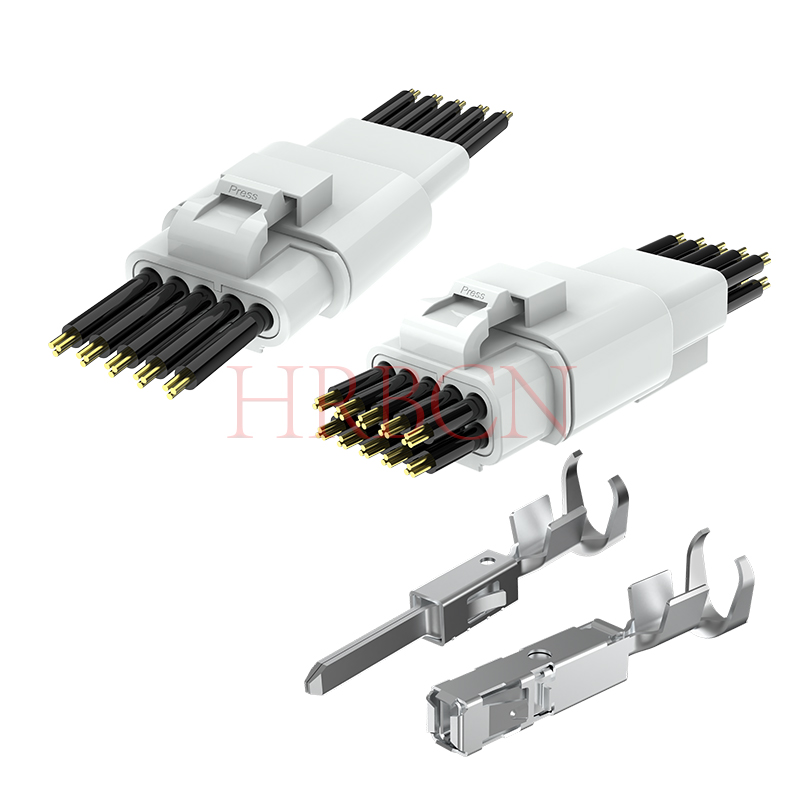
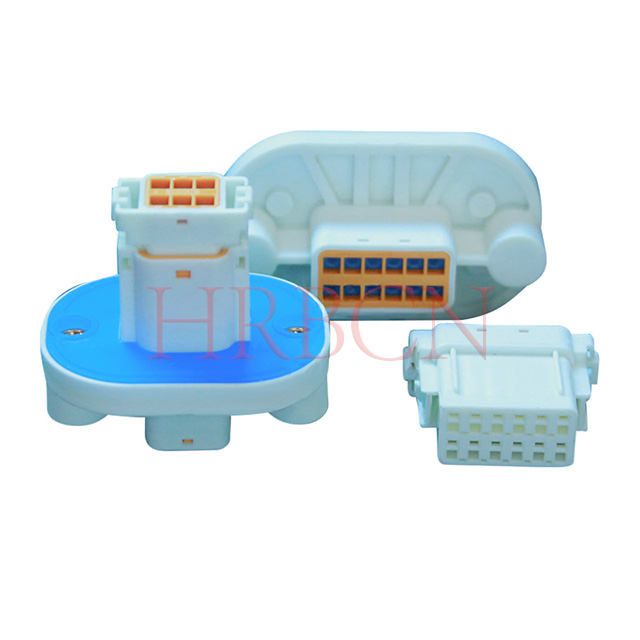
Modular machinery and robotics often require heavy-duty rectangular connectors. These interconnects manage high pin counts and complex power distribution. They utilize rugged die-cast aluminum or heavy-duty thermoplastic housings. Inside the housing, engineers can mix and match modular inserts. You can combine pneumatics, gigabit data, and high-voltage power up to 600V in a single frame. The rectangular shape requires specialized sealing mechanisms. Instead of a simple circular O-ring, they use perimeter profile gaskets. Heavy-duty locking levers compress this gasket evenly. This design protects sensitive internal connections from harsh factory environments. You must pay close attention to the locking levers. Single-lever designs are faster to operate but can apply uneven pressure if the housing is wide. Double-lever designs provide superior, balanced compression across the entire perimeter gasket, making them the preferred choice for applications requiring strict liquid ingress protection.
Renewable-Specific Connectors (Solar/Wind)
Renewable energy systems operate outdoors for decades. Solar arrays and wind turbines face extreme environmental abuse. Solar connectors, like MC4 variants, handle high DC voltages up to 1500V and high amperages. They must survive constant UV exposure without becoming brittle. They endure extreme temperature fluctuations, from freezing nights to blistering afternoons. Wind turbine connectors face heavy vibration and salt spray in offshore deployments. A renewable-specific Waterproof connector utilizes specialized UV-stabilized polymers like polycarbonate or modified PPO. They often feature snap-in locking mechanisms that require a tool to disconnect, preventing accidental un-mating by untrained personnel. The internal contacts usually employ a multi-point louvered design to maintain low contact resistance even as the housing expands and contracts daily under the sun.
Fiber Optic Waterproof Connectors
Transmitting high-bandwidth data in harsh environments requires sealed fiber optics. Optical connections are highly sensitive to contamination. A single speck of dust or drop of water scatters the light signal, causing massive insertion loss. Sealing these connections is difficult. Physical contact fiber connectors require precise alignment of the ceramic ferrules. Expanded beam technology offers a more robust solution for dirty environments. It uses spherical lenses to expand the light beam across an air gap, then refocuses it into the receiving fiber. This makes the connection much less sensitive to microscopic debris and moisture. Both technologies require ruggedized, sealed outer housings, typically machined from aluminum or stainless steel, to protect the delicate optical fibers from physical crushing and fluid ingress.
How to Choose the Right Waterproof Connector
Decoding Ingress Protection (IP) Ratings Accurately
Engineers often misinterpret IP ratings. The first digit represents solid particle protection. The second digit represents liquid ingress protection. IP67 indicates protection against temporary immersion. The component can survive in one meter of water for 30 minutes. IP68 indicates protection against continuous immersion. However, the exact depth and duration are manufacturer-defined. You must read the specific datasheet. IP69K is entirely different. It signifies protection against high-pressure, high-temperature washdowns. It is specific to food-grade and pharmaceutical automation. An IP68 connector will likely fail an IP69K test. They test completely different environmental vulnerabilities. IP68 tests static pressure. IP69K tests dynamic, high-velocity water jets at 80°C. You cannot assume a higher number covers all lower numbers.
| IP Rating | Solid Protection | Liquid Protection Level | Typical Application Environment |
| IP65 | Dust-tight | Low-pressure water jets from any direction. | Indoor factory automation, light washdown. |
| IP67 | Dust-tight | Temporary immersion (1 meter for 30 minutes). | Outdoor enclosures, heavy machinery. |
| IP68 | Dust-tight | Continuous immersion (depth/time defined by maker). | Underwater sensors, flooded trenches. |
| IP69K | Dust-tight | High-pressure, high-temperature water jets (80°C). | Food processing, pharmaceutical plants. |
Material Selection and Environmental Resistance
Material science dictates connector longevity. You must match the housing and seals to the specific environment. Zinc die-cast and stainless steel offer extreme impact resistance. Stainless steel resists harsh chemical corrosion, making it ideal for marine and food processing applications. Engineered plastics, like polyamide (PA66) and PBT, offer lightweight alternatives. They resist many industrial oils but may absorb moisture over time if not properly formulated. Nitrile (NBR) resists oil but degrades under UV light. Silicone offers excellent extreme temperature performance but tears easily under mechanical stress. EPDM provides outstanding UV and weather resistance. FKM (Viton) withstands harsh chemicals and high temperatures. Some advanced interconnects use specialized surface treatments. These hydrophobic coatings act as a primary barrier. They repel water before it ever reaches the mechanical rubber seal, reducing the chance of fluid pooling in the mating interface.
| Seal Material | Temperature Range | Primary Strengths | Common Applications |
| Nitrile (NBR) | -30°C to +100°C | Excellent oil and fuel resistance, good tear strength. | General factory automation, machine tools. |
| Silicone | -50°C to +200°C | Extreme temperature flexibility, excellent UV resistance. | Cold storage, outdoor solar arrays. |
| EPDM | -40°C to +150°C | Outstanding weather, ozone, and steam resistance. | Outdoor renewables, washdown environments. |
| FKM (Viton) | -20°C to +200°C | Superior chemical and high-temperature resistance. | Chemical processing, heavy industrial plants. |
Advanced Sealing and Manufacturing Techniques
Mechanical seals sometimes fail. Advanced manufacturing techniques provide secondary barriers. Potting and encapsulation fill the connector backshell with epoxy or polyurethane. This compound hardens around the internal wires. If the outer cable jacket tears, water cannot travel through the backshell into the contact area. Polyurethane remains flexible, absorbing cable flex, while epoxy provides a rigid, highly chemical-resistant barrier. Ultrasonic welding offers another advantage. Traditional housings use screws to compress two halves together. Ultrasonic welding fuses the plastic halves permanently using high-frequency vibrations. This creates a highly impermeable seam that cannot loosen over time. It eliminates the need for a secondary housing gasket and removes the risk of screws backing out under vibration. Overmolding is another technique where the cable and connector are injected with molten plastic in a single mold, creating a seamless, factory-tested bond that is nearly impossible to breach.
Mechanical Stability and Locking Mechanisms
A waterproof seal only works if the connector remains fully mated. Locking mechanisms dictate this stability. Threaded couplings offer high security. They compress the O-ring evenly but require time to mate. Bayonet locks provide a quick connection. A quarter-turn provides tactile feedback, confirming a secure lock. Push-pull connectors save space and allow for blind mating in tight enclosures. In high-vibration environments, standard threaded nuts can back off. Anti-vibration mechanisms, like internal ratcheting teeth, prevent this. They ensure the O-ring remains compressed despite continuous machine vibration. You will feel and hear a distinct clicking as you tighten a ratcheting nut. This mechanical interference prevents the nut from loosening unless deliberate, significant force is applied in the reverse direction.
Electrical Performance Under Environmental Stress
Environmental stress directly impacts electrical performance. Moisture increases contact resistance over time through micro-corrosion. Extreme temperatures affect the current-carrying capacity of the pins. As ambient temperature rises, the connector cannot dissipate heat effectively. Engineers must consult current derating curves provided by the manufacturer. A pin rated for 10 amps at 20°C might only handle 5 amps at 80°C. Pushing 10 amps at 80°C will melt the plastic insert and destroy the seal. Insulation resistance also drops when moisture permeates the plastic housing. Evaluating a Waterproof connector requires analyzing these electrical shifts under simulated environmental loads. You must ensure the dielectric withstand voltage remains high enough to prevent arcing between adjacent pins, especially in high-humidity environments where the air's insulating properties are compromised.
Common Waterproof Connector Risks and How to Prevent Them
Installation Errors and Improper Torque
Human error causes most field failures. Over-tightening a threaded connector crushes the O-ring. The rubber extrudes from the groove, destroying the seal. Under-tightening leaves microscopic gaps for water to enter. You must mitigate these installation risks. Specify interconnects with poka-yoke (mistake-proofing) designs. Use connectors that provide a clear audible click when fully seated. For threaded variants, mandate the use of calibrated torque tools. Provide field technicians with exact torque specifications. Removing guesswork ensures the O-ring achieves optimal compression every time.
Inspect the O-ring and mating surfaces for debris or damage before assembly.
Align the keyways precisely to prevent bending the internal contact pins.
Hand-tighten the coupling nut until you feel initial resistance from the seal.
Apply a calibrated torque wrench set to the manufacturer's exact specification.
Perform a visual inspection to ensure no gaps exist between the mated halves.
Thermal Cycling and Seal Degradation
Outdoor applications experience severe thermal cycling. Connectors heat up during the day and cool down at night. This creates a breathing effect. As internal air heats, it expands and pushes outward. As it cools, it contracts, creating a vacuum. This vacuum sucks moisture past aging seals. Dissimilar materials expand at different rates, exacerbating the problem. To mitigate this, match thermal expansion coefficients between housings and panels where possible. Utilize Accelerated Life Testing (ALT) data during the specification process. Choose radial O-ring designs, which maintain contact better during thermal expansion than face seals. You can also implement breathable membrane vents in the equipment enclosure. These vents allow pressure to equalize without letting liquid water in, significantly reducing the vacuum stress on the connector seals.
Chemical Exposure and UV Degradation
Chemicals and sunlight destroy plastics and rubber. In solar arrays, prolonged UV exposure breaks down standard polymer chains. The plastic becomes brittle and shatters under minor impact. In food automation, caustic cleaning agents swell or dissolve standard rubber seals. You must cross-reference chemical compatibility charts before specifying materials. Do not guess. For outdoor applications, mandate UV-stabilized materials. Look for a UL 746C f1 rating, which certifies the plastic for outdoor use regarding UV exposure and water immersion. For chemical washdowns, default to 316L stainless steel housings and FKM seals to ensure longevity. Avoid standard polyurethanes in environments with high humidity and high heat, as they can suffer from hydrolysis, where the material literally breaks down into a sticky, useless mess.
Conclusion
Audit your current field failures to identify specific environmental ingress points and document the exact failure modes.
Cross-reference chemical compatibility charts for all cleaning agents, lubricants, and coolants used in your facility against your proposed seal materials.
Mandate calibrated torque tools for all field installations involving threaded interconnects to prevent O-ring crushing.
Request physical product samples and subject them to thermal cycling and submersion tests in your own facility before mass deployment.
Standardize your interfaces using M-series or heavy-duty rectangular profiles to simplify future maintenance and reduce inventory complexity.
FAQ
Q: What is the exact difference between a water-resistant and a waterproof connector?
A: A water-resistant connector repels light surface moisture and splashes but fails under sustained pressure. A true waterproof connector remains completely impermeable under submersion and pressure, utilizing engineered O-rings, tight tolerances, and often internal potting to prevent any fluid ingress.
Q: What is the practical difference between an IP67 and IP68 waterproof connector?
A: IP67 protects against temporary immersion in one meter of water for 30 minutes. IP68 protects against continuous immersion under pressure. However, the exact depth and duration for IP68 are defined by the manufacturer, so you must always check the specific product datasheet.
Q: Can an IP68 waterproof connector be submerged permanently?
A: Not necessarily. While IP68 implies continuous immersion, the manufacturer defines the exact limits. One IP68 connector might be rated for two meters for 24 hours, while another is rated for fifty meters permanently. Always verify the manufacturer's specific testing parameters.
Q: How do UV rays and extreme temperatures affect waterproof connectors in solar applications?
A: Prolonged UV exposure breaks down standard polymer chains, causing plastic housings to become brittle and crack. Extreme temperature swings cause thermal expansion and contraction, which can compromise rubber seals. Solar applications require specialized UV-stabilized plastics and extreme-temperature silicone or EPDM seals.
Q: What is the most reliable locking mechanism for waterproof connectors in high-vibration environments?
A: Threaded couplings with internal anti-vibration ratcheting mechanisms are highly reliable. The ratcheting teeth prevent the locking nut from backing off during continuous vibration. Bayonet locks are also excellent, as their mechanical design inherently resists vibrating loose once fully engaged.
Q: How do you test the seal integrity of a waterproof connector after installation?
A: Field testing often involves visual inspection for proper mating and verifying correct torque application. In controlled environments, engineers use air leak testing. They apply internal air pressure to the sealed assembly and monitor for pressure drops, which indicate a compromised seal.


