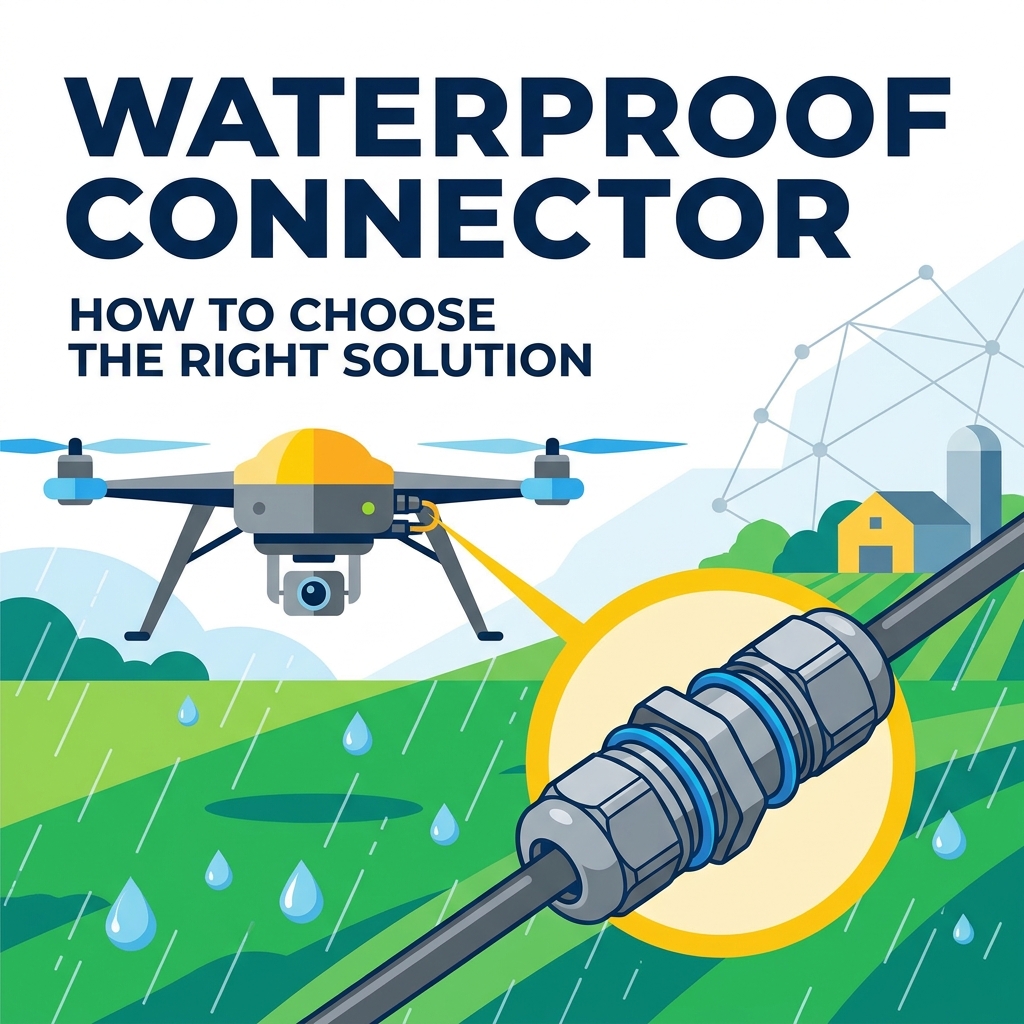
Agricultural Unmanned Aerial Vehicles (UAVs) operate in some of the most unforgiving environments for electronic hardware. These heavy-duty machines face constant exposure to moisture, corrosive chemicals, extreme mechanical vibration, and severe mechanical shock. Specifying an inadequate connection solution leads directly to signal degradation, power shorts, and catastrophic mid-flight failures. For agricultural drone fleets, a single connector failure translates into costly downtime, lost chemical payloads, and compromised operational safety. Selecting the right Waterproof connector requires moving beyond basic IP ratings. You must evaluate hermetic sealing, chemical resistance, locking mechanisms, electrical load matching, and size-to-weight ratios. This guide breaks down the technical criteria for evaluating and shortlisting connection solutions for agricultural UAV applications.
IP Rating Realities: IP67 is the baseline, but IP68 or IP69K waterproof connectors are required for UAVs subjected to high-pressure washdowns or prolonged exposure to liquid fertilizers.
Chemical Compatibility is Critical: Water resistance does not equal chemical resistance; O-ring and housing materials must be evaluated against specific agricultural payloads (pesticides, herbicides).
The Weight-Durability Trade-off: Micro-connectors reduce payload drag, but engineers must balance miniaturization with the mechanical ruggedness required to withstand high-frequency rotor vibration and hard landings.
Locking Mechanisms Prevent Failure: Push-pull and threaded coupling systems are mandatory to maintain hermetic seals and electrical continuity during aggressive flight maneuvers, while still allowing for rapid field maintenance.
Why Agricultural UAVs Need Durable Waterproof Connectors
Chemical Exposure: Fertilizers and Pesticides
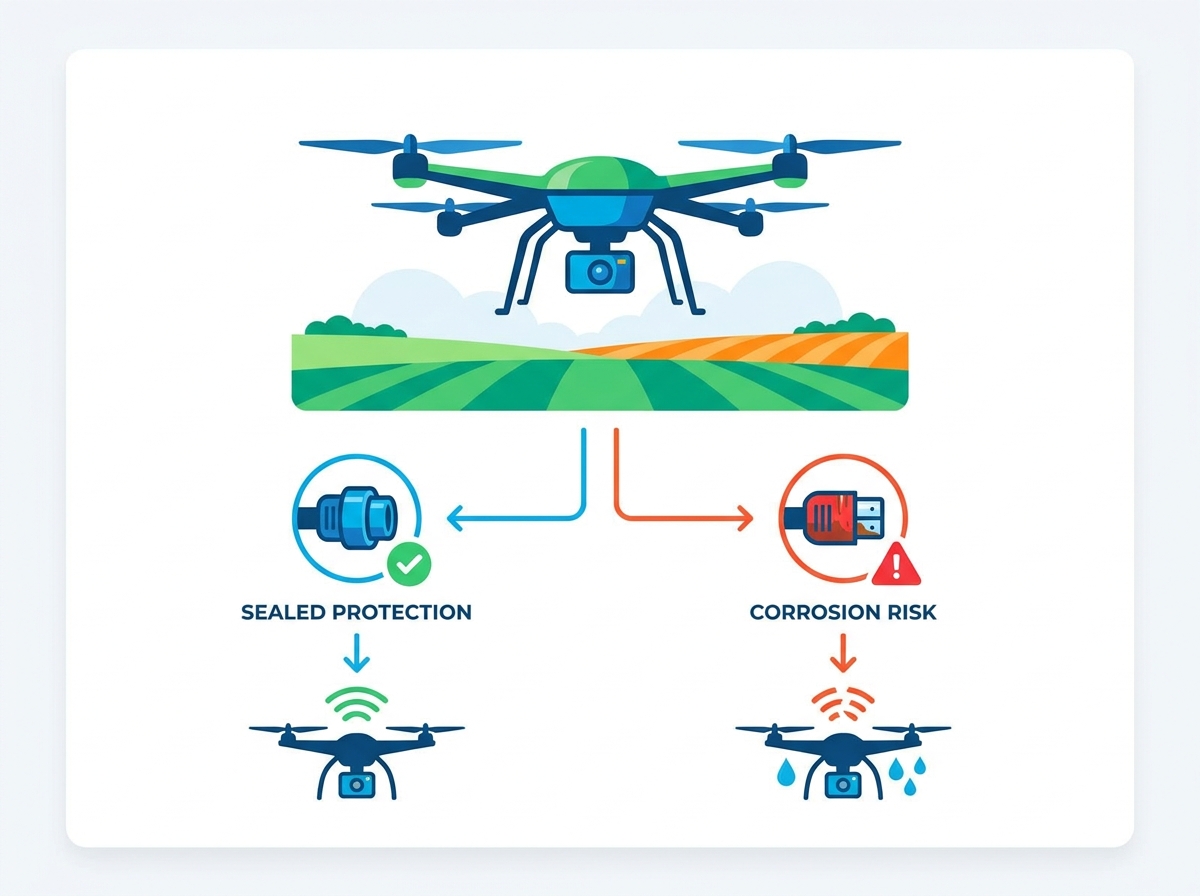
Agricultural chemicals severely degrade standard electronic housings and contact pins. Field operators routinely load drones with aggressive payloads like glyphosate, ammonium nitrate, and sulfur-based fungicides. These chemical agents attack basic plastics and eat away at low-grade rubber seals over time. Once the outer housing weakens, moisture easily breaches the internal contacts. You need a robust connection solution designed specifically for these harsh environments. Success requires specifying chemically inert housings made from advanced engineered polymers like PEEK or specialized polyamides. You must also mandate specialized seal materials like FKM or Viton. These industrial-grade materials prevent long-term polymer chain degradation. They maintain structural integrity during constant chemical exposure. We see standard silicone seals swell and lose their compression set after just a few weeks of pesticide exposure. FKM resists this swelling, keeping the internal electrical pathways dry and secure.
High-Pressure Washdowns and Moisture Ingress
Agricultural drones require routine and aggressive post-flight washdowns. Operators regularly hose down the equipment to remove sticky chemical residue and field debris. This necessary cleaning process introduces severe thermal cycling to the hardware. Drone motors and power distribution boards often reach 80°C during a heavy-lift flight. When operators spray these hot components with 15°C water, the rapid temperature drop creates a powerful vacuum effect inside the sealed hardware enclosures. The vacuum actively draws moisture past inferior seals and microscopic gaps. Standard rubber seals fail under this intense pressure differential. You must select a Waterproof connector engineered specifically to withstand both high-pressure cleaning jets and sudden thermal shock. Connectors lacking proper pressure equalization or deep potting will pull water directly into the solder joints, causing immediate shorts on the next power-up.
High-Frequency Vibration and Mechanical Shock
Rotor-induced vibration wreaks havoc on traditional mating interfaces. Heavy-lift agricultural drones generate high-frequency shaking ranging from 50Hz to over 200Hz. This constant motion causes micro-fretting corrosion on the contact pins. Micro-fretting wears away the protective gold plating, exposing base metals like copper or nickel to rapid oxidation. You must implement a connection solution featuring high-retention force contacts. Mechanical shock resilience is equally important for field operations. Housings and locking mechanisms must handle hard landings, sudden payload releases, and accidental impacts. The outer shell cannot crack or deform. Any structural damage instantly compromises the hermetic seal. We often see cheap plastic connectors shatter when a drone lands heavily on uneven terrain. Specifying impact-resistant materials prevents these field failures.
How to Choose the Right IP Rating for UAV Waterproof Connectors
IP67 vs. IP68 vs. IP69K: What Actually Matters for UAVs
Basic water resistance remains entirely insufficient for heavy-duty agricultural drones. IP67 protects hardware against temporary submersion in one meter of water for thirty minutes. It works fine for brief rain exposure but fails under active pressure. IP68 handles continuous submersion at depths and durations specified by the manufacturer. This higher rating protects expensive drones during accidental water landings in irrigation ponds. IP69K withstands high-pressure, high-temperature water jets sprayed from close range. The IP69K test involves water heated to 80°C sprayed at 80 to 100 bar of pressure. Agricultural drones face aggressive maintenance routines daily. Operators frequently use power washers to clean off hardened fertilizers. Therefore, IP69K is increasingly the mandatory standard for reliable, long-term drone operations. Do not settle for IP67 if your maintenance protocol involves pressure washing.
The Role of Hermetic Sealing and Multi-Layer Gaskets
A true waterproof connection relies on advanced internal engineering. It utilizes multi-layer gaskets, deep internal potting, and precision-molded O-rings. Hermetic sealing creates an absolute airtight barrier. This barrier blocks both liquid ingress and fine particulate matter. Agricultural fields generate massive amounts of abrasive dust, pollen, and dry fertilizer powder. These microscopic particulates destroy internal contacts if they breach the housing. They act like sandpaper, grinding away the conductive plating during high-vibration flights. Multi-layer seals and epoxy potting ensure complete isolation from the outside environment. Potting compounds like polyurethane or epoxy fill the rear cavities of the connector. This prevents water from wicking down the wire strands and entering the contact area.
Best Materials for Lightweight and Durable UAV Connectors
Plastic/Composite vs. Metal Housings
Composite and engineered plastics offer significant payload weight reduction. Materials like PA66 or PEEK provide natural corrosion resistance against harsh agricultural chemicals. However, plastics sacrifice some extreme impact resistance compared to alloys. Metal housings, typically machined from aluminum or stainless steel, deliver superior ruggedness. They also provide excellent EMI and RFI shielding for sensitive internal electronics. The primary trade-off involves heavier payload weight, which directly reduces flight time. Metals also face high susceptibility to galvanic corrosion if improperly plated. Aluminum housings require hard anodizing or specialized nickel plating to survive outdoor environments. You must weigh these material factors carefully based on your specific flight time requirements and operating environments.
Contact Plating for Signal Integrity
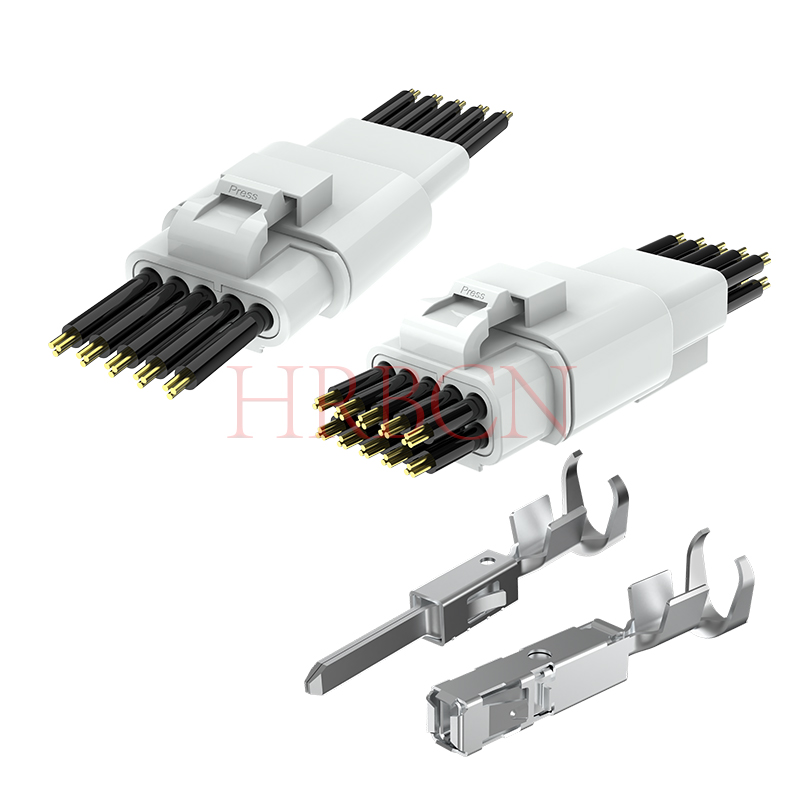
Contact plating directly dictates signal quality and power efficiency. Tin plating costs less but oxidizes very quickly in high-humidity outdoor environments. Gold plating provides vastly superior electrical performance. You should specify heavy gold plating, typically 30 to 50 microinches, for all UAV applications. Gold ensures exceptionally low contact resistance and maintains high signal integrity. It prevents oxidation even when exposed to moisture, fertilizers, and extreme temperature shifts. Reliable telemetry and precise GPS data depend entirely on clean, highly conductive contact surfaces. When specifying a Waterproof connector, always verify the plating thickness on the manufacturer's datasheet. Thin gold flashing will wear off after just a few dozen mating cycles.
O-Ring and Seal Materials
Seal material determines the chemical survival rate of the entire assembly. Silicone offers excellent temperature flexibility but degrades rapidly around harsh petrochemicals. EPDM handles weather, ozone, and pure water exceptionally well. However, EPDM fails quickly when exposed to petroleum-based pesticides or synthetic lubricants. FKM, commonly known in the industry as Viton, provides the highest level of chemical resistance available.
| Seal Material | Water Resistance | Chemical Resistance (Pesticides) | Best UAV Application |
| Silicone | Excellent | Poor | Clean water spraying, high-temperature zones |
| EPDM | Excellent | Fair | General weatherproofing, non-chemical payloads |
| FKM (Viton) | Excellent | Excellent | Harsh agricultural chemicals, fertilizers, fuels |
Use this strict decision framework: select EPDM for pure water exposure, but mandate FKM for any drone carrying harsh agricultural payloads. FKM maintains its elasticity and sealing properties even after prolonged chemical baths.
Key Electrical and Mechanical Requirements for UAV Connectors
Power vs. Signal Transmission Requirements
Agricultural drones require highly complex electrical architectures. You must physically or electrically separate high-current power lines from low-voltage signal lines. Rotors and liquid pumps draw massive current, requiring heavy-gauge wire. Sensors and telemetry require clean, uninterrupted signals on lighter wire. Heavy-lift drones utilize high-voltage systems, often running 12S or 14S lithium batteries. These systems operate between 44.4V and 51.8V, with current spikes exceeding 100 amps during aggressive maneuvers. You must evaluate the dielectric withstanding voltage to handle these heavy loads safely without arcing. High-current motors generate severe electrical noise during flight. Assess the EMI and RFI shielding capabilities to protect sensitive GPS signals. Consider implementing a hybrid Waterproof connector to optimize space. A hybrid solution combines heavy power pins and delicate signal pins in a single shielded housing. This saves crucial payload weight and reduces the number of cables you need to route through the drone frame.
Size and Weight Constraints (Micro-Connectors)
Connector weight directly impacts drone battery life and operational efficiency. Every extra gram reduces available flight time and decreases the total acreage covered per charge. Engineers often turn to micro-connectors to solve this weight problem. However, extreme miniaturization introduces new operational risks. You must ensure the reduced physical footprint does not compromise electrical performance. The dielectric withstanding voltage must remain high despite closer pin spacing. Current-carrying capacity cannot drop below the motor requirements. Most importantly, the integrity of the waterproof seal must survive the miniaturization process without becoming fragile. Micro-connectors require precision-molded micro-O-rings that demand exact tolerances during manufacturing.
Secure Locking Mechanisms and Field Usability
Coupling styles dictate the mechanical reliability of the connection. Threaded mechanisms offer extreme security under high vibration, preventing accidental disconnects. Bayonet styles provide a reliable balance of connection speed and locking force. Push-pull mechanisms excel in rapid deployment and fast-paced field scenarios. You must assess how each specific mechanism performs under mechanical shock. Balance this required security with practical field-serviceability. Prioritize quick-disconnect features for rapid battery swaps between flights. Field technicians often wear heavy protective gloves to avoid chemical exposure. The locking mechanism must remain easily operable without requiring bare-hand precision.
Follow these steps to evaluate field usability:
Test the connector with heavy nitrile or neoprene gloves.
Verify the locking mechanism provides an audible or tactile click when fully engaged.
Ensure the release mechanism does not require specialized tools.
Check that the housing design prevents cross-mating or reverse polarity connections.
Common UAV Connector Failure Risks and How to Prevent Them
High Frequency of Connection Cycles and Long-Term Wear
Daily agricultural operations require hundreds of battery swaps and payload changes. This high frequency creates a massive risk of premature seal degradation. Contact pins and internal retention springs wear down rapidly under constant daily use. To mitigate this mechanical wear, specify connectors rated for high mating cycles. Look for manufacturer ratings exceeding 500 complete cycles. Establish strict preventative maintenance schedules for your field teams. Technicians must routinely inspect and replace internal O-rings before they fail mid-flight. Ignoring cycle limits leads directly to loose connections, increased electrical resistance, and sudden power loss.
Cable Gland and Termination Failures
A high-end Waterproof connector is only as reliable as its rear cable termination. Water frequently enters through the backshell, not the front mating face. Cable flexing during aggressive flight maneuvers creates microscopic gaps in poor terminations. To mitigate this severe risk, mandate custom overmolded cable assemblies. Overmolding injects molten plastic around the joint, creating a seamless, watertight bond. Alternatively, use high-quality cable glands equipped with robust strain relief. Proper strain relief prevents moisture ingress and protects the internal solder joints from destructive mechanical stress.
Supply Chain and Compliance Standards
Counterfeit components pose a severe threat to commercial drone fleets. Uncertified connectors fail unpredictably in the field due to substandard materials. Counterfeiters often use cheap brass instead of beryllium copper for contacts, leading to a rapid loss of spring tension. These sudden failures lead to crashed drones and hazardous chemical spills. You must mitigate this risk by enforcing strict supply chain controls. Require comprehensive vendor documentation for every batch. Demand verifiable proof of RoHS and REACH compliance. Always verify third-party IP testing certificates before approving any new components for mass deployment.
Conclusion
Selecting a waterproof connector for agricultural UAVs requires a holistic evaluation of IP ratings, chemical compatibility, electrical load matching, and vibration resistance. You cannot shop based on unit price or basic spec sheets. Prioritize IP68 or IP69K ratings, FKM seals, high mating cycle ratings, and secure locking mechanisms as non-negotiable baseline requirements.
For projects requiring reliable connector solutions in demanding electrical environments, Shenzhen Haiyuncheng Electronics, established in 2010, specializes in the R&D, production, and sales of electrical connectors under the HRB brand. Its portfolio includes more than 2,000 product series, including IP67, IP68, and IP69K waterproof connectors, supported by manufacturing, engineering, and quality-control capabilities for industrial and other demanding applications.
Take the following actionable steps to finalize your hardware selection:
Request physical product samples from multiple manufacturers to evaluate build quality and tactile locking feedback.
Conduct in-house thermal shock, mechanical drop, and chemical exposure testing using your specific agricultural payloads.
Consult directly with connector engineering teams to design and validate custom overmolded cable assemblies.
Establish a standardized field maintenance protocol for inspecting contacts and replacing O-rings.
FAQ
Q: What is the difference between an IP67 and IP68 waterproof connector for drones?
A: IP67 protects against temporary submersion in one meter of water for up to 30 minutes. IP68 allows for continuous submersion under specific depths and durations defined by the manufacturer. For agricultural drones, IP68 ensures the hardware survives accidental crash-landings in deep water, irrigation ponds, or exposure to torrential rain without short-circuiting.
Q: Can standard waterproof connectors withstand agricultural pesticides?
A: No. Standard connectors typically use silicone or basic EPDM rubber seals. These materials degrade, swell, or crack when exposed to the harsh petrochemicals found in pesticides and liquid fertilizers. You must specify chemically resistant materials, such as FKM or Viton, to maintain the hermetic seal over time.
Q: How do micro-connectors maintain a waterproof seal without compromising electrical performance?
A: Micro-connectors rely on precision engineering to balance size and performance. They utilize micro-O-rings, high-density internal potting techniques, and precise dielectric spacing. This advanced construction prevents electrical arcing between closely packed pins while maintaining a strict barrier against moisture and dust ingress.
Q: What is the best locking mechanism for a UAV waterproof connector?
A: Threaded mechanisms offer the highest security against severe rotor vibration. However, push-pull mechanisms are often preferred for agricultural UAVs. They provide excellent vibration resistance while allowing technicians wearing thick protective gloves to perform rapid field disconnects during battery swaps.
Q: Why do waterproof connectors fail in the field?
A: Field failures rarely happen at the front mating interface. They usually occur due to improper rear cable termination or a lack of strain relief. Other primary culprits include exceeding the rated mating cycles, which wears down the contacts, and chemical degradation of the O-rings from pesticide exposure.
Q: Are hybrid connectors a good choice for agricultural drones?
A: Yes, hybrid connectors are excellent for drones. They combine heavy power pins and delicate signal pins within a single housing, significantly reducing payload weight and saving space. You must ensure they feature adequate EMI shielding and proper voltage separation to prevent high-current noise from disrupting sensitive telemetry signals.


