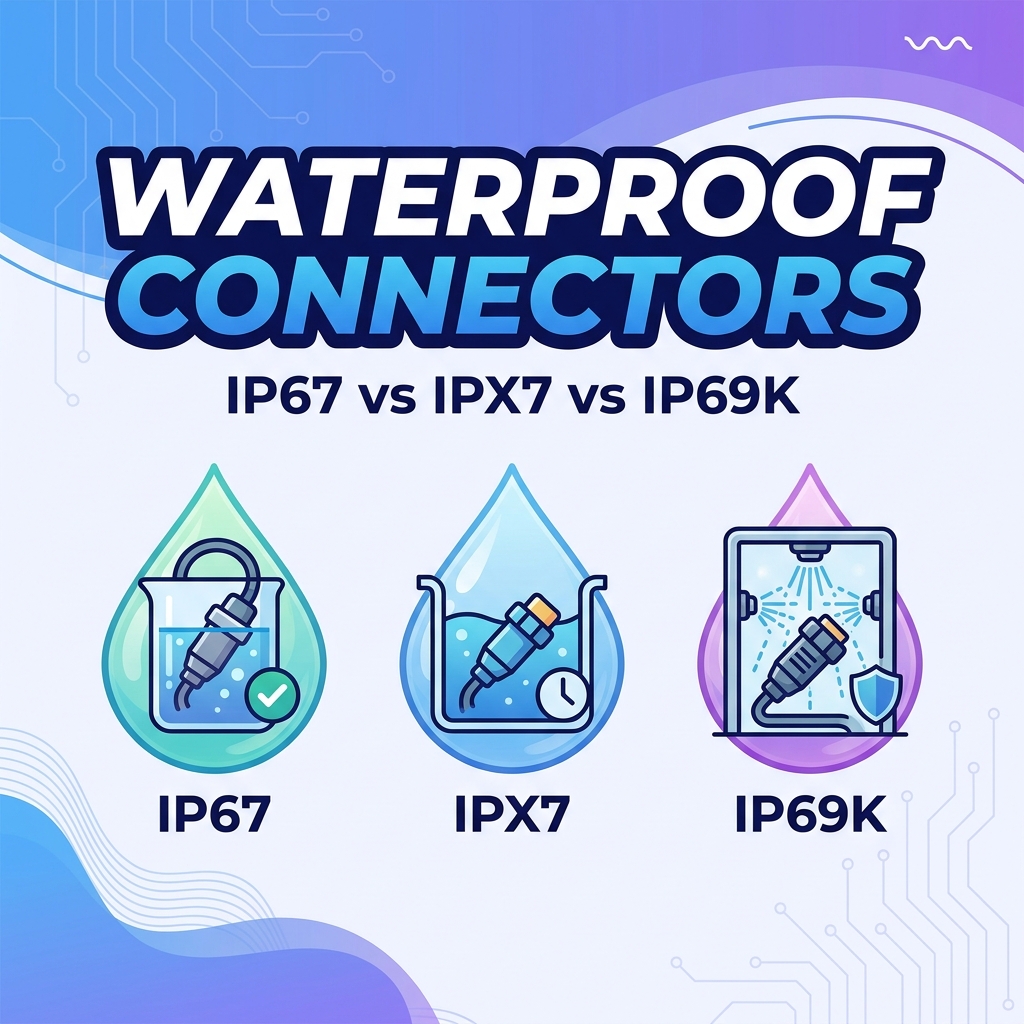
Water ingress in field environments causes short circuits, signal degradation, and system-wide downtime. Specifying the correct component prevents these failures. Many engineers operate under the misconception that Ingress Protection (IP) ratings are strictly linear. They assume a higher number automatically guarantees universal protection across all environments. This is false. A waterproof connector rated for deep immersion may instantly fail under high-pressure water jets.
We will evaluate the technical framework required to decode IP67, IPX7, and IP69K standards. You will learn how to specify the exact component required for your operational environment without over-engineering the solution. Understanding the distinct testing parameters behind these ratings ensures your systems remain operational under specific environmental hazards.
The "X" Variable: An IPX7 rating guarantees water immersion protection but indicates the component has not been formally tested for dust or solid particulate ingress.
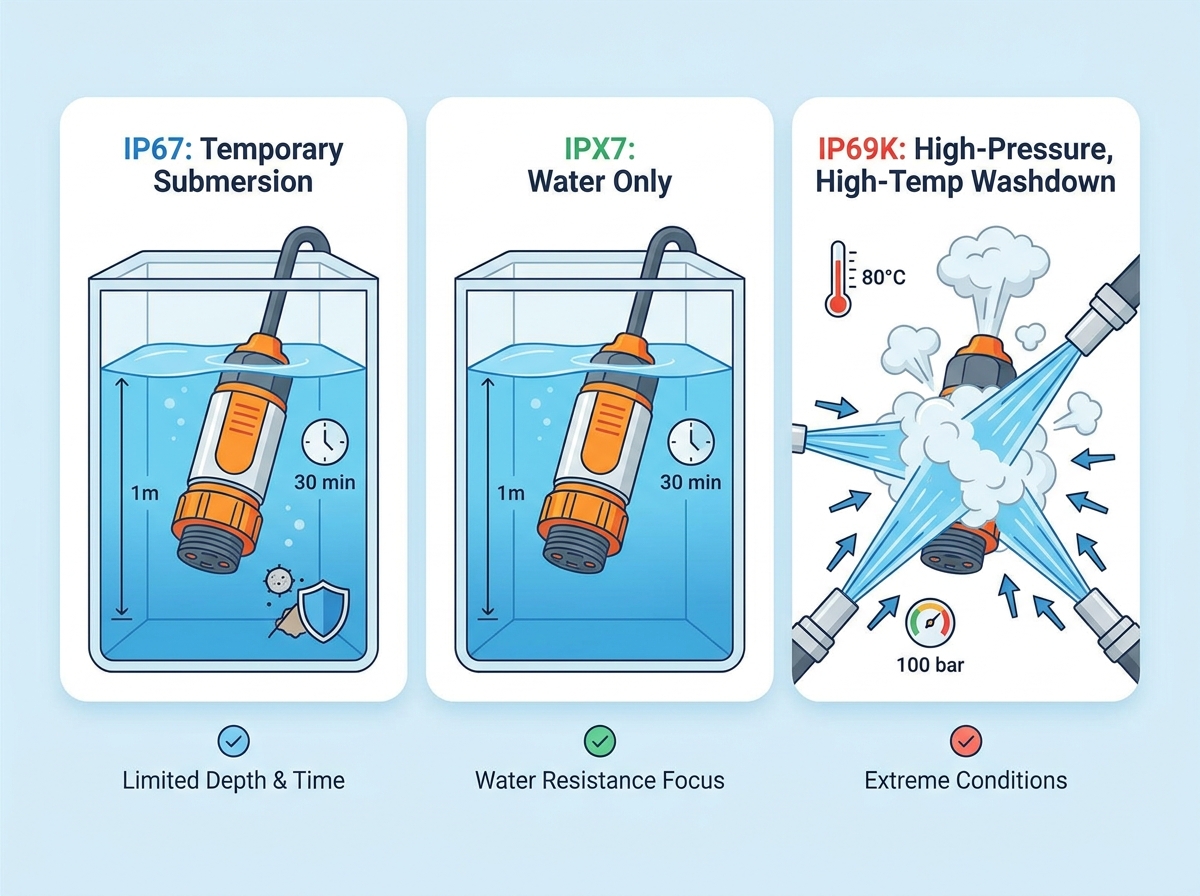
Static vs. Dynamic Protection: IP67 and IPX7 protect against static, temporary immersion (up to 1 meter for 30 minutes), whereas IP69K is engineered specifically for dynamic, high-pressure, high-temperature washdowns.
The Linearity Myth: Passing an immersion test (IP67) does not mean a waterproof connector automatically passes high-pressure water jet tests (IP65/IP66). Dual ratings (e.g., IP67/IP69K) are required for multi-hazard environments.
How IP Ratings Work for Waterproof Connectors
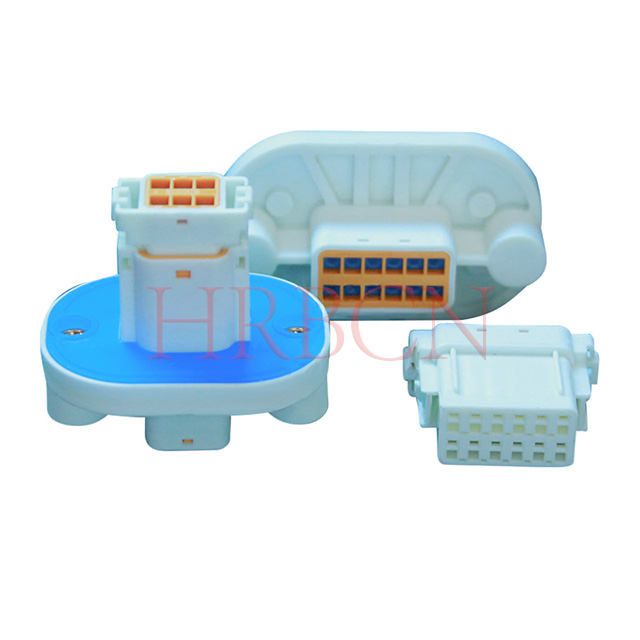
The International Electrotechnical Commission (IEC) standard 60529 defines the Ingress Protection rating system. Engineers use this framework to classify the degrees of protection provided against the intrusion of solid objects, dust, accidental contact, and water in electrical enclosures. Understanding the specific digits prevents specification errors in the field.
The First Digit: Solid Ingress
The first digit in an IP rating indicates the level of protection against solid particulates. This scale ranges from 0 to 6. A rating of 0 offers no protection. Numbers 1 through 4 indicate protection against increasingly smaller solid objects, from large body parts down to wires and small tools. When you see a 5, the component is dust-protected, meaning some dust may enter but will not interfere with satisfactory operation. A rating of 6 means the component is completely dust-tight. Testers place the unit in a vacuum chamber and expose it to circulating talcum powder. No ingress of dust is permitted under these strict vacuum conditions.
IEC 60529 First Digit (Solid Ingress) Scale | Level | Object Size Protected Against | Field Application Context |
| 0 | Not protected | Open contacts, no enclosure. |
| 1 | > 50 mm | Protects against accidental touch by hands. |
| 2 | > 12.5 mm | Protects against fingers or similar objects. |
| 3 | > 2.5 mm | Protects against tools and thick wires. |
| 4 | > 1 mm | Protects against most wires, slender screws, and large ants. |
| 5 | Dust protected | Ingress is not entirely prevented, but dust cannot enter in sufficient quantity to interfere with operation. |
| 6 | Dust-tight | Absolute protection against contact. Tested under continuous vacuum pressure. |
The Second Digit: Liquid Ingress
The second digit measures protection against water ingress. This scale ranges from 0 to 9. It is vital to understand that this scale covers entirely different types of water exposure. Numbers 1 through 3 cover dripping and spraying water. Numbers 4 through 6 cover splashing water and powerful water jets. Number 7 introduces temporary immersion. Number 8 covers continuous immersion. Number 9 (specifically 9K) introduces high-pressure, high-temperature washdowns. A waterproof connector must pass the exact test parameters associated with its specific digit.
IEC 60529 Second Digit (Liquid Ingress) Scale | Level | Protection Type | Testing Parameters |
| 4 | Splashing water | Water splashed from all directions for 10 minutes. |
| 5 | Water jets | Water projected by a 6.3 mm nozzle from any direction (12.5 liters/minute). |
| 6 | Powerful water jets | Water projected by a 12.5 mm nozzle from any direction (100 liters/minute). |
| 7 | Temporary immersion | Submersion up to 1 meter depth for exactly 30 minutes. |
| 8 | Continuous immersion | Submersion beyond 1 meter. Exact depth and time defined by the manufacturer. |
| 9K | High-pressure/temp washdown | 1450 psi water jets at 80°C from multiple close-range angles. |
The "X" Designation
You will frequently encounter ratings like IPX7 or IP6X. The "X" does not mean zero protection. It simply means the manufacturer did not collect formal test data for that specific parameter. If a component is rated IPX7, it passed the immersion test, but the manufacturer chose not to run the vacuum dust test. The component might naturally resist dust, but it lacks the official certification. Engineers must evaluate whether the missing certification poses a field risk for their specific application.
IP67 Waterproof Connectors: Dust and Temporary Immersion Protection
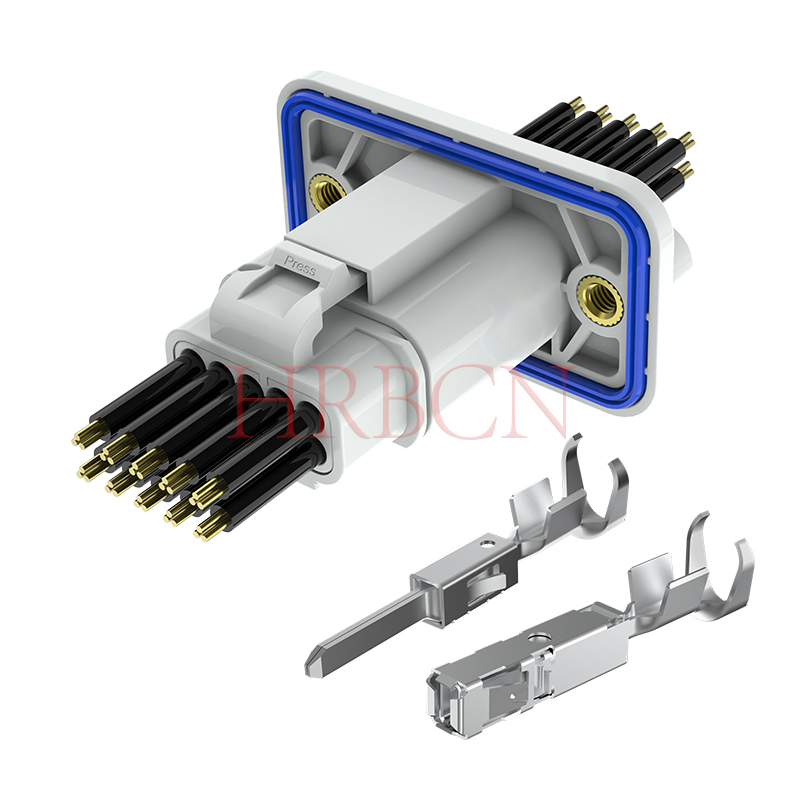
IP67 represents the baseline standard for rugged outdoor equipment. It provides robust protection against both fine particulates and temporary submersion in water. Engineers frequently specify this rating for equipment exposed to heavy rain, puddles, and accidental drops into shallow water.
Test Parameters
The testing conditions for IP67 are exact and fixed. Technicians submerge the component in a water tank. The lowest point of the enclosure must be 1 meter below the surface, or the highest point must be 15 centimeters below the surface, whichever requires deeper submersion. The component remains underwater for exactly 30 minutes. The water temperature must not differ from the equipment temperature by more than 5 Kelvin. If the component survives this 30-minute static hydrostatic pressure test without harmful water ingress, it earns the rating.
Dust Protection
The "6" in IP67 guarantees absolute protection against fine dust and particulates. This is non-negotiable for outdoor environments. Wind-blown sand, industrial metallic dust, and agricultural dirt easily foul mating threads or degrade internal O-rings over time. A certified IP67 component ensures that no solid matter can bypass the external seals to reach the conductive pins.
IP67 vs. IP68: Fixed vs. Variable Testing
Industry professionals often confuse IP67 and IP68. IP67 uses strict, fixed testing conditions universally applied across all testing labs. IP68 testing parameters are variable. The manufacturer defines the depth and duration for IP68, provided the conditions exceed the IP67 baseline. One manufacturer might define IP68 as 2 meters for 1 hour. Another might define it as 50 meters for 24 hours. You must always read the manufacturer's specific data sheet when evaluating an IP68 component. IP67 offers a standardized, predictable baseline.
Ideal Applications
IP67 components excel in environments where static, temporary submersion is the primary risk. Common applications include:
Outdoor telecommunications infrastructure exposed to severe weather.
Marine surface equipment subjected to wave splashes and deck pooling.
Off-road vehicle telematics and sensor arrays.
GPS tracking modules in hazardous or agricultural environments.
Industrial automation sensors located in flood-prone facility zones.
Limitations
You must respect the physical limits of IP67. These components are not rated for continuous, long-term submersion. Capillary action and gradual seal degradation will eventually allow moisture to bypass the barriers if left underwater indefinitely. Furthermore, IP67 components are not designed to withstand high-pressure cleaning. The seals manage static hydrostatic pressure, not high-velocity kinetic impacts.
IPX7 Waterproof Connectors: Water Protection Without a Dust Rating
An IPX7 rating provides the exact same water protection as IP67, but it intentionally omits the formal dust testing certification. This distinction allows engineers to optimize component selection based on precise environmental hazards.
Test Parameters
The liquid ingress test for IPX7 is identical to IP67. The component undergoes the same 30-minute submersion at a depth of up to 1 meter. It must resist the same static hydrostatic pressure. The internal contacts must remain completely dry. The only difference is the absence of the vacuum talcum powder test.
Why Choose IPX7?
Selecting an IPX7 component often comes down to resource allocation and practical engineering logic. If you design a system that operates entirely within a clean-room liquid environment, dust is non-existent. Running the IP6X testing adds unnecessary certification overhead. Similarly, if you mount the component inside a secondary NEMA-rated enclosure that already provides absolute dust protection, the internal component only needs to survive potential liquid pooling. IPX7 provides the necessary liquid safeguard without redundant particulate testing.
Ideal Applications
IPX7 components fit perfectly into controlled environments where solid ingress is not a primary failure mode. Typical use cases include:
Consumer electronics like smartwatches and fitness trackers.
Indoor medical devices requiring liquid sanitation but operating in sterile rooms.
Specific industrial fluid-handling systems housed inside larger protective cabinets.
Marine internal compartment sensors protected from external wind and dirt.
Implementation Risk
Using an IPX7 component in a rugged outdoor setting introduces severe implementation risks. The "X" means it lacks verified protection against dirt, mud, or sand. In an agricultural or off-road environment, abrasive particles will accumulate around the mating mechanism. When technicians connect and disconnect the system, these particles grind against the O-rings and elastomer seals. Over time, this abrasion destroys the sealing integrity, eventually allowing water to bypass the damaged barriers. Never use IPX7 where airborne particulates are a known hazard.
IP69K Waterproof Connectors for High-Pressure, High-Temperature Washdowns
Standard immersion ratings fall short in environments requiring aggressive sanitation. IP69K represents the highest tier of the ingress protection scale, engineered specifically to survive brutal, dynamic cleaning processes.
Test Parameters
The IP69K test is violent. Technicians place the component on a turntable rotating at 5 revolutions per minute. They blast it with water heated to 80°C (176°F). The water pressure ranges from 1160 to 1450 psi (80 to 100 bar). The spray nozzle sits just 10 to 15 centimeters away from the component. The technicians apply this high-pressure jet at four specific angles: 0, 30, 60, and 90 degrees. Each angle receives 30 seconds of continuous blasting. The component must survive this thermal and kinetic assault without any water ingress.
The "K" Designation
The "K" designation originally comes from the German DIN 40050-9 standard, which was developed for road vehicles. Heavy dump trucks and cement mixers required components that could survive aggressive pressure washing. The broader industrial sector recognized the value of this extreme testing. The IEC eventually adopted the IP69K standard into the broader IEC 60529 framework. Today, the "K" universally signifies resistance to high-pressure, high-temperature washdowns.
Ideal Applications
IP69K components are mandatory in industries governed by strict hygiene and sanitation regulations. Key applications include:
Food and beverage processing plants requiring daily caustic washdowns.
Heavy construction equipment subjected to intense pressure washing.
Medical sterilization equipment and surgical robotics.
Pharmaceutical manufacturing lines.
Waste management and sanitation vehicles.
Material Realities
Achieving an IP69K rating requires advanced material science. Standard plastics and basic rubber seals melt, deform, or shatter under 80°C water blasted at 1450 psi. IP69K components utilize high-grade stainless steel (like 316L) or specialized thermoset plastics like PEEK. The seals rely on advanced fluoropolymers (like FKM or Viton) rather than standard EPDM rubber. These materials resist thermal shock, prevent compression set under extreme pressure, and withstand the chemical degradation caused by industrial cleaning agents.
Does a Higher IP Rating Always Mean Better Waterproof Protection?
The most dangerous trap in component specification is assuming the IP scale is perfectly linear. Many engineers believe that an IP67 rating automatically encompasses IP65 and IP66 protections. This fundamental misunderstanding leads to field failures.
Immersion vs. Jets (IP67 vs. IP65/IP66)
Water ingress physics change drastically depending on the delivery method. An IP67 seal is designed to withstand static hydrostatic pressure. The pressure is evenly distributed across the entire surface of the seal. However, an IP65 or IP66 test applies a focused, high-velocity water jet. This jet creates localized kinetic energy. A seal that easily holds back the gentle, even pressure of 1 meter of water might deform or fold when hit by a sharp, high-velocity stream. The jet simply bypasses the static seal design.
Different Tests, Not Better Protection
Increasing numbers represent entirely different testing methodologies, not a compounding level of waterproofness. IP67 tests for temporary immersion. IP66 tests for powerful water jets. A component can pass IP67 and fail IP66. Conversely, a component designed to deflect high-pressure jets (IP66) might leak when submerged underwater (IP67) because it lacks the specific O-ring compression required for hydrostatic resistance. You must match the test to your actual field hazard.
Dual-Rated Connectors
Manufacturers solve this engineering challenge by designing and certifying components for multiple specific ratings. When a system faces both deep puddles and pressure washers, you cannot rely on a single rating. You must source a dual-rated component. Manufacturers list these parts with multiple designations, such as IP66/IP67/IP69K. This multi-listing proves the component passed the jet test, the immersion test, and the high-temperature washdown test independently. Always demand dual ratings for multi-hazard environments.
How to Choose the Right Waterproof Connector
Selecting the optimal component requires a structured evaluation framework. You must map your specific environmental hazards directly to the mechanical capabilities of the hardware.
Problem Framing (Success Criteria)
Before reviewing product catalogs, define your exact environmental exposure. Ask the following questions:
Is the water exposure static (puddles, floods, rain) or dynamic (sprays, pressure washers, jets)?
What is the maximum duration of the exposure? Is it a temporary 10-minute splash or a continuous 24-hour submersion?
What secondary hazards exist? Will the component face hydraulic fluids, UV radiation, or extreme thermal cycling?
Answering these questions isolates the specific IP tests your component must pass.
Evaluation Dimensions (Features-to-Outcomes)
Once you define the hazards, evaluate the mechanical features of the waterproof connector. The IP rating is only a baseline. The physical design determines long-term field survival.
Mating Cycles
Consider how often technicians will connect and disconnect the system. Frequent mating degrades elastomer seals. A component might test at IP67 fresh off the assembly line, but after 500 mating cycles, the compressed O-rings lose their elasticity. If your application requires frequent disconnection, specify components with high-durability fluorocarbon seals and robust alignment keys to prevent seal tearing.
Locking Mechanisms
The locking mechanism dictates how well the seal maintains compression under physical stress. Different environments demand different mechanical approaches.
Comparison of Connector Locking Mechanisms | Locking Type | Mechanism Action | Vibration Resistance | Field Application |
| Threaded | Screw-on coupling nut. | High (if properly torqued). | Heavy machinery, static industrial sensors. |
| Bayonet | Push and twist (quarter turn). | Very High (tactile click confirms lock). | Off-road vehicles, military equipment, high-vibration zones. |
| Push-Pull | Linear push to lock, pull sleeve to release. | Moderate to High. | Medical devices, tight spaces requiring rapid connection. |
Threaded couplings provide excellent, even compression but are susceptible to cross-threading by rushed technicians. Bayonet couplings offer a tactile click, ensuring positive engagement and resisting vibration-induced backing out. Push-pull mechanisms allow for rapid connection in tight spaces but rely heavily on internal latching strength. Choose the mechanism that best secures the seal against your specific environmental vibrations.
Cable Glands and Overmolding
A sealed housing is useless if water wicks down the internal wires. The cable termination point is the most common failure zone. Standard cable glands rely on physical compression against the cable jacket. If the jacket shrinks or deforms, water enters. For demanding applications, specify overmolded cable assemblies. Overmolding physically fuses the cable jacket to the connector housing, eliminating the mechanical gap entirely and providing superior strain relief.
Implementation Risks & Mitigation
Even the best hardware fails if implemented poorly. Anticipate field risks and design mitigation strategies into your standard operating procedures (SOPs).
Human Error
Improper torque during installation is a leading cause of ingress. If a technician under-tightens a threaded coupling, the O-ring fails to compress. If they over-tighten it, the O-ring extrudes or tears. Implement strict torque specifications and use torque wrenches during assembly. Alternatively, specify bayonet couplings that eliminate torque variables entirely.
Thermal Cycling
Extreme temperature changes cause housing materials to expand and contract. This creates a breathing effect. As the component cools, internal pressure drops, creating a vacuum that actively sucks moisture past the seals. To mitigate this, utilize potting compounds to eliminate internal air voids. Fill the backshell with epoxy or polyurethane resin to create a solid, impenetrable block behind the contact pins.
Comparison of Waterproof Connector IP Ratings | IP Rating | Water Exposure Type | Dust Protection | Testing Conditions | Primary Use Case |
| IPX7 | Static Immersion | Not Certified | 1 meter depth, 30 minutes | Clean-room liquid environments, secondary enclosures |
| IP67 | Static Immersion | Absolute (Vacuum Tested) | 1 meter depth, 30 minutes | Outdoor rugged equipment, marine surface, agriculture |
| IP69K | Dynamic High-Pressure | Absolute (Vacuum Tested) | 1450 psi, 80°C water, close range | Food processing, medical sanitation, heavy construction |
Conclusion
IP67 remains the standard for rugged outdoor static immersion. IPX7 provides a highly effective alternative for dust-free liquid environments where particulate testing is unnecessary. IP69K is absolutely mandatory for dynamic, high-pressure, high-temperature sanitation environments. Never assume that a higher number covers all lower-tier tests. Map your exact operational hazards directly to the specific test parameters of the IP scale.
For connector projects that require reliable environmental sealing, Shenzhen Haiyuncheng Electronics, established in 2010 and operating under the HRB brand, specializes in the R&D, production, and sales of electrical connectors, including IP67, IP68, and IP69K waterproof connector solutions. Its product portfolio serves industrial electrical systems, automotive electronics, and energy storage applications, supporting customers with connector solutions for different environmental and application requirements.
Take the following steps to secure your systems:
Review your system's environmental specifications to differentiate between static hydrostatic hazards and dynamic kinetic water hazards.
Consult with a component specialist to verify material compatibility, especially if your application involves IP69K chemical washdowns or extreme thermal cycling.
Audit your current installation SOPs to ensure technicians apply correct torque and fully engage locking mechanisms.
Request product samples and conduct localized field testing to verify that the lab-certified IP rating holds up under your specific real-world operational stresses.
FAQ
Q: Does an IP69K waterproof connector automatically meet IP67 standards?
A: No, it does not. IP69K tests for high-pressure, high-temperature water jets. IP67 tests for static underwater immersion. These are entirely different physics and testing methodologies. If your equipment faces both pressure washers and deep puddles, you must source a component with dual certification.
Q: What is the difference between IP67 and IP68 waterproof connectors?
A: IP67 utilizes strict, universally fixed testing conditions: temporary immersion up to 1 meter for exactly 30 minutes. IP68 represents continuous immersion, but the testing conditions are variable. The manufacturer defines the exact depth and duration for IP68, provided it exceeds the IP67 baseline. Always check the manufacturer's specific data sheet.
Q: Can I use an IPX7 connector outdoors?
A: You should avoid using IPX7 components outdoors. The "X" indicates the component lacks verified testing against dust, dirt, and sand. In outdoor environments, abrasive particulates will accumulate and grind against the seals during mating cycles, eventually destroying the watertight integrity. Always use IP67 or higher for outdoor applications.
Q: How does thermal shock affect a waterproof connector's IP rating?
A: Rapid temperature changes cause internal air to expand and contract, creating a vacuum effect known as breathing. This vacuum can suck moisture past standard seals. Additionally, extreme thermal shock can cause O-rings to harden or crack, compromising their elasticity and leading to immediate water ingress.
Q: Are mated and unmated IP ratings the same?
A: Rarely. Most components only achieve their stated IP rating when fully mated and properly locked. An unmated receptacle is usually vulnerable to water and dust ingress unless it features a specialized internal hermetic seal. Always use certified protective caps on unmated connectors to maintain the environmental rating.


