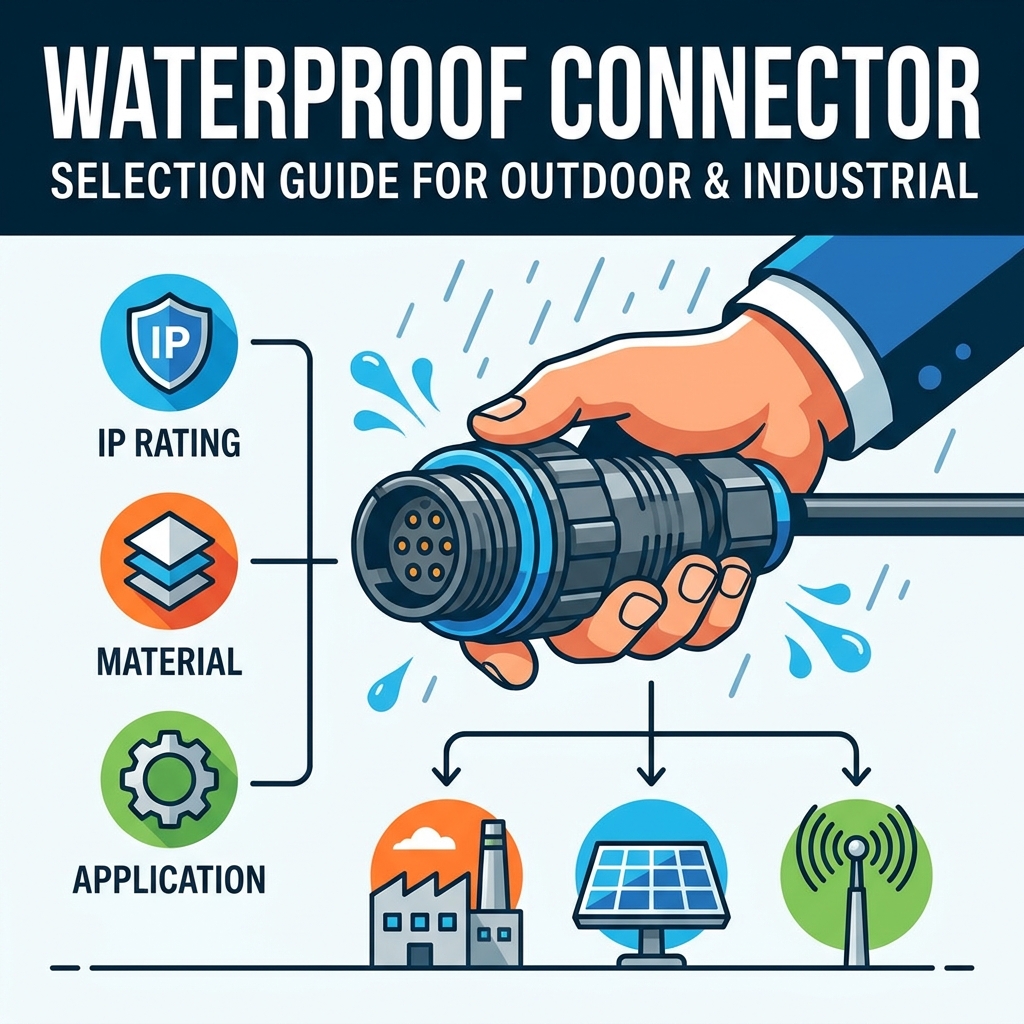
Connector failure in harsh environments shuts down operations fast. A compromised seal leads to equipment damage, safety hazards, and operational downtime. Specifying a Waterproof connector goes far beyond checking a box for water resistance. Engineers and procurement teams must align ingress protection ratings with actual mechanical, electrical, and environmental realities on the ground. Choosing the wrong component results in moisture ingress, galvanic corrosion, or thermal degradation.
You need a solid framework for evaluating IP ratings, material science, electrical specifications, and mounting configurations. This approach helps you select the exact component for industrial, marine, renewable energy, or outdoor use cases. By understanding the intersection of environmental stress and electrical performance, you engineer robust systems that survive unforgiving conditions.
IP Ratings Require Context: IP67 protects against temporary submersion (up to 1 meter for 30 minutes), whereas IP68 is for continuous immersion but requires verifying the manufacturer's specific depth and duration limits.
Thermal and Electrical Derating: Enclosed, waterproof environments trap heat. Electrical requirements (current/voltage) must be evaluated alongside operating temperatures to prevent thermal degradation.
Material Science Dictates Longevity: The choice between nylon, polycarbonate, or metal alloys directly impacts the connector's resistance to UV radiation, chemical exposure, salt fog, and physical impact.
Installation Integrity is Critical: A waterproof connector is only as reliable as its installation. Cable gland mismatches and improper mating torque are the leading causes of ingress failure in the field.
How to Choose the Right Waterproof Connector
Environmental Exposure Baselines
Mapping exact environmental conditions is the first step in component selection. You must evaluate ambient moisture levels, the angle of direct rain, submersion risks, and high-pressure washdown requirements. A component designed to survive occasional splashes fails rapidly if subjected to continuous high-humidity cycles. Temperature fluctuations cause air inside enclosures to expand and contract. This creates a vacuum effect that actively pulls moisture past weak seals. In field applications like offshore wind farms or agricultural processing plants, this vacuum effect is the primary driver of water ingress.
Secondary environmental threats often dictate the final material choice. Marine environments expose equipment to aggressive saltwater, requiring specialized salt fog resistance to prevent galvanic corrosion. Industrial facilities introduce cutting fluids, hydraulic oils, or corrosive gases that degrade standard rubber seals. Agricultural settings combine high dust levels with ammonia exposure. You must cross-reference these secondary threats with the chemical compatibility of the housing and sealing gaskets. A seal that blocks water perfectly might dissolve when exposed to industrial lubricants.
Mechanical and Thermal Stress Factors
Continuous vibration, physical shock, and extreme temperature cycling severely impact the integrity of seals and locking mechanisms over time. Heavy machinery, excavators, and stamping presses subject wiring to constant kinetic energy. This vibration loosens threaded couplings or degrades bayonet locks if they lack anti-vibration mechanisms. When a lock loosens even slightly, the compression on the internal O-ring drops. This instantly compromises the waterproof rating, allowing moisture to seep into the contact chamber.
Outdoor wire connectors face the added challenge of prolonged UV exposure and harsh weather conditions. Ultraviolet radiation breaks down standard plastics, causing them to become brittle and crack under minimal physical stress. Extreme cold stiffens rubber gaskets, reducing their ability to maintain a tight seal under pressure. You must evaluate the operating temperature range of both the rigid housing and the flexible sealing components to ensure long-term mechanical stability across all seasons.
Industry Certifications and Regulatory Compliance
Selecting components that meet specific industry standards is non-negotiable for critical infrastructure. UL listings verify safety against fire and electrical shock, ensuring the materials will not act as an accelerant during a short circuit. RoHS compliance ensures materials are free from hazardous substances, which is mandatory for global distribution. For marine applications, NMEA standards dictate specific performance criteria for navigation and communication networks exposed to the elements.
Certified components streamline the final approval process for larger industrial and automotive assemblies. When you build a system using pre-certified parts, you reduce the testing burden on the final product. This accelerates time-to-market and minimizes the risk of failing compliance audits. Regulatory compliance acts as a reliable filter during the initial sourcing phase, instantly weeding out substandard components that cannot survive rigorous third-party testing.
The Cost of Failure Analysis
Evaluating the true impact of component selection requires looking beyond the initial purchase order. You need a framework for weighing the upfront cost of high-grade industrial components against the potential fallout of a system failure. A cheap plastic housing might save a few dollars on the assembly line, but it triggers massive expenses in the field when it cracks under pressure.
Calculate the financial impact of system downtime, emergency maintenance dispatch, and total equipment replacement. In remote solar installations or offshore platforms, the labor cost to dispatch a technician to replace a single failed component often exceeds the price of the part by a massive margin. Investing in a robust, highly rated Waterproof connector serves as an insurance policy against catastrophic operational halts and dangerous electrical shorts.
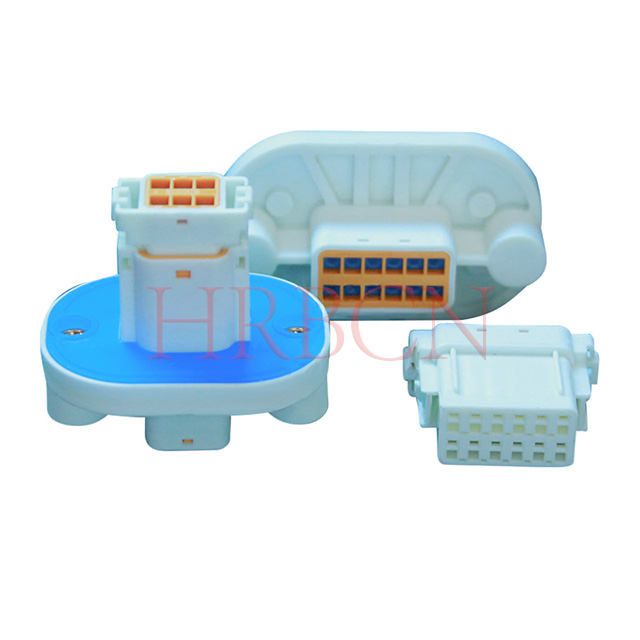
IP67 vs. IP68 vs. IP69K: Waterproof Connector Ratings Explained
The Overlooked First Digit: Dust and Solid Ingress
The IP (Ingress Protection) rating system consists of two numbers, yet the first digit is frequently overlooked. The "6" in IP67 and IP68 signifies complete, dust-tight protection against fine particulates. This rating is just as critical as water resistance in many environments. Manufacturing facilities generate metallic dust, agricultural settings produce organic particulates, and outdoor solar arrays face constant windblown sand.
If dust breaches a housing, it coats the electrical contacts. This increases contact resistance, generates excess heat, and eventually causes electrical failure. In high-voltage applications, conductive dust accumulation creates unintended pathways, leading to short circuits or arcing. A dust-tight seal ensures consistent electrical performance regardless of the surrounding air quality, keeping the internal contacts clean and conductive.
IP67: Temporary Immersion Realities
IP67 is one of the most common ratings, but its limitations are often misunderstood in the field. The standard defines strict parameters: protection against water ingress during temporary submersion at a depth of 1 meter for up to 30 minutes. It is a static test performed under controlled laboratory conditions. It does not account for dynamic water pressure, flowing currents, or prolonged exposure to moisture.
This rating is perfectly sufficient for outdoor lighting, automotive applications, or environments exposed to heavy rain and temporary puddles. It protects equipment during flash floods or accidental drops into shallow water. However, IP67 is entirely inadequate for permanent underwater installations, pool lighting, or marine hulls. Deploying an IP67 component in a continuous submersion scenario guarantees eventual failure as water slowly forces its way past the seals.
IP68: Continuous Submersion and Manufacturer Specifications
A common industry misconception assumes IP68 represents a universal standard of extreme depth. In reality, the "8" simply means the component is rated for continuous submersion under conditions more severe than IP67. The exact depth and duration are left to the manufacturer to define. One IP68 component might be rated for 2 meters for 24 hours, while another is rated for 50 meters permanently.
You must demand specific testing data from manufacturers regarding exact depth and duration limits for IP68 claims. Never deploy these components in marine, deep-water, or critical fluid management applications without verifying the underlying test parameters. Always confirm whether the rating applies only when the component is fully mated, or if the individual halves maintain the rating while disconnected. Many IP68 connectors lose all protection the moment they are unmated.
IP69K: High-Pressure and High-Temperature Washdowns
IP69K was developed for specialized industrial applications that require aggressive sanitation. This rating indicates resistance to high-pressure water jets (80-100 bar) at high temperatures (80°C). The testing involves spraying the component from multiple angles at very close range on a rotating turntable. This rating is not about depth; it is about surviving violent, localized mechanical force and thermal shock.
Food and beverage processing plants, pharmaceutical manufacturing, and heavy medical machinery rely heavily on IP69K components. These environments use caustic cleaning chemicals and steam to maintain hygiene. Standard IP67 or IP68 seals get blasted apart by a pressure washer. IP69K housings feature specialized geometries and heavy-duty seals to deflect high-velocity water and resist chemical degradation.
| IP Rating | Water Protection Level | Testing Parameters | Ideal Field Application |
| IP67 | Temporary Submersion | 1 meter depth for 30 minutes (Static) | Outdoor lighting, heavy rain exposure, temporary puddles. |
| IP68 | Continuous Submersion | Defined by manufacturer (e.g., 5 meters for 72 hours) | Underwater sensors, marine equipment, flooded vaults. |
| IP69K | High-Pressure Washdown | 80-100 bar pressure at 80°C from close range | Food processing, medical sanitation, heavy equipment cleaning. |
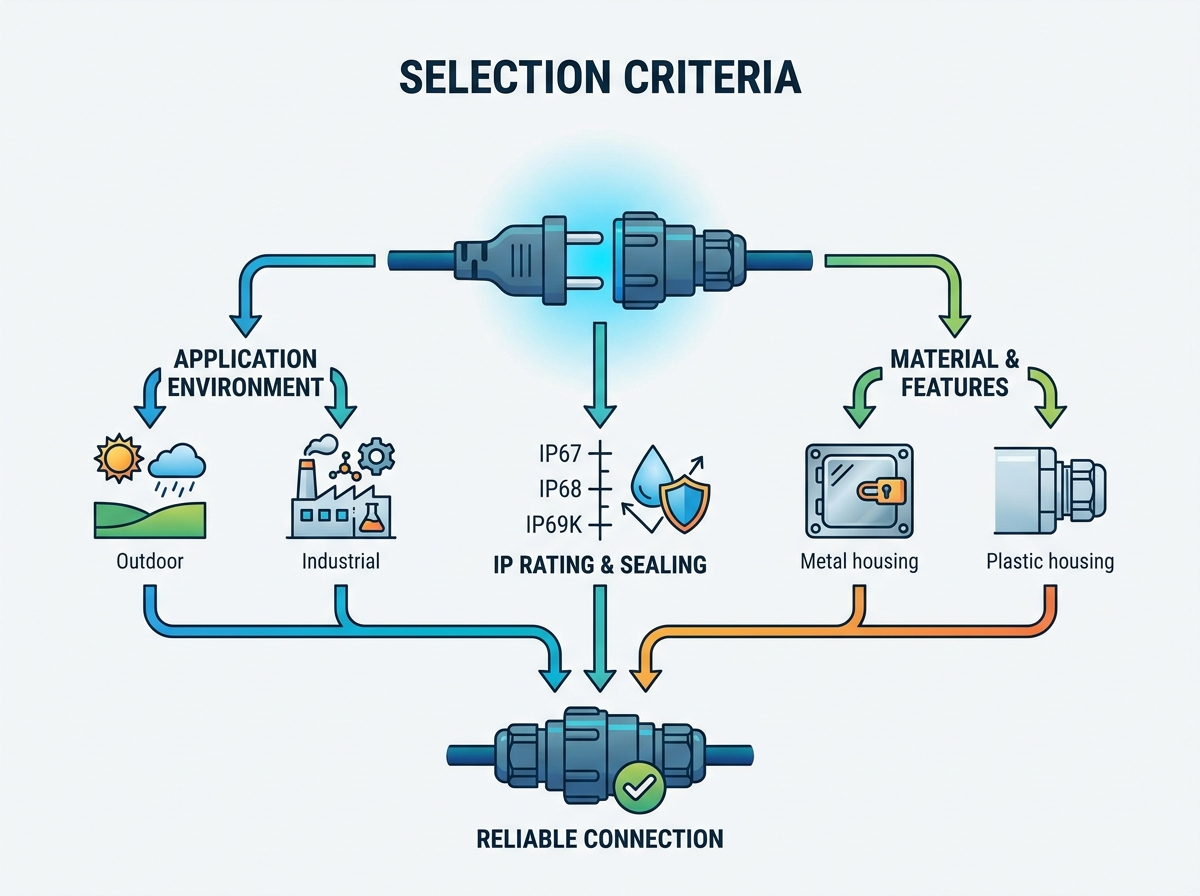
Types of Waterproof Connectors and Their Applications
Circular Waterproof Connectors (Power and Data)
Standard circular formats, such as the M8 and M12 series, dominate industrial automation, sensor networks, and robotics. Their cylindrical design naturally distributes mechanical stress and provides a highly effective surface for O-ring compression. The threaded coupling mechanism ensures a secure, vibration-resistant connection that maintains consistent pressure on the waterproof seal, even when mounted on vibrating machinery.
The circular format has expanded far beyond simple power delivery. You can now specify waterproof RJ45, USB, and fiber optic variants housed within rugged circular shells. This enables reliable, high-speed data transmission in harsh manufacturing environments. The widespread adoption of standardized form factors ensures multi-vendor interoperability. Engineers source compatible components from various global suppliers without redesigning their system architecture.
Panel Mount Waterproof Connectors
Panel mount solutions route power or data through equipment enclosures, battery systems, and control panels. They serve as the critical bridge between the harsh outside environment and the protected internal electronics. The design typically involves a threaded body that passes through a cutout in the enclosure wall, secured by a locking nut on the inside.
The overall IP rating of the enclosure relies entirely on the integrity of the panel gasket. You must evaluate the wall thickness of the enclosure to ensure the locking nut compresses the gasket adequately. Uneven panel surfaces, burrs around the cutout, or incorrect torque on the mounting nut create microscopic gaps. These gaps lead to inevitable water ingress, destroying the sensitive electronics housed inside.
Inline and Splice Connectors
Inline and splice solutions manage cable-to-cable connections in distributed systems. They are heavily utilized in architectural outdoor lighting, sprawling solar energy arrays, and modular battery energy storage systems. These components allow installers to link multiple cable segments securely while maintaining a continuous waterproof barrier across the entire network.
Engineers evaluate the trade-offs between field-installable options and factory-molded cables. Field-installable units allow technicians to cut cables to custom lengths on-site, offering maximum flexibility during installation. However, they rely on the technician's skill to assemble the seals correctly. Factory overmolded cables provide guaranteed seal integrity directly from the manufacturer, eliminating human error, but they require precise length calculations during the design phase.
Heavy-Duty Rectangular Connectors
Applications requiring high pin counts or modular configurations rely on heavy-duty rectangular designs. These are prevalent in harsh manufacturing, railway systems, and heavy machinery environments. The rectangular form factor allows for modular inserts. You combine high-current power, low-voltage signal, and pneumatic lines within a single, robust housing.
These housings are typically cast from aluminum alloys and feature heavy-duty locking levers rather than threaded rings. The locking levers provide a massive mechanical advantage, compressing thick perimeter gaskets to achieve IP65, IP67, or IP68 ratings. They withstand extreme physical abuse, flying debris, and accidental impacts on the factory floor without compromising the internal connections.
Key Electrical and Material Specifications for Waterproof Connectors
Matching Rated Current and Voltage
Calculating power requirements accurately is essential for system safety. You must evaluate the maximum continuous current and peak voltage the circuit will experience. Applying a safety margin is necessary, especially in high-draw applications like battery systems and industrial motors. Operating a component at its absolute maximum rating reduces its lifespan and increases the risk of failure during unexpected power surges.
You must address the risk of thermal runaway in tightly sealed waterproof environments. Because these housings are airtight, they severely restrict heat dissipation. As current flows through the contacts, electrical resistance generates heat. If this heat cannot escape, the internal temperature rises, which further increases resistance. You consult the manufacturer's thermal derating curves to adjust the maximum allowable current based on the ambient operating temperature. Ignoring thermal derating leads to melted housings and electrical fires.
Contact Materials and Plating
The conductive elements inside the housing dictate the electrical reliability of the connection. Base metals like brass or copper alloys provide the structural foundation, but the surface plating determines performance. You compare gold, silver, and tin plating based on the specific application requirements. Each material reacts differently to mechanical wear, electrical loads, and environmental exposure.
Gold plating offers superior corrosion resistance and excellent conductivity for low-level signals. It is ideal for data transmission and applications requiring high mating cycles, as it resists micro-fretting. Silver plating provides the highest electrical conductivity, making it the standard choice for high-power, high-current applications, though it is susceptible to tarnishing. Tin is a cost-effective option for static, low-current connections with very few mating cycles, but it suffers from fretting corrosion under heavy vibration.
| Plating Material | Primary Application | Conductivity Level | Corrosion Resistance | Mating Cycle Durability |
| Gold | Data, Sensors, Low Voltage | High | Excellent | Very High (Resists Fretting) |
| Silver | High Power, Motor Drives | Very High | Moderate (Tarnishes) | Moderate to High |
| Tin | Static Power, Cost-Sensitive | Moderate | Low to Moderate | Low (Prone to Fretting) |
Housing Material Selection
The exterior housing acts as the primary defense against environmental degradation. Material selection directly impacts the component's survival rate. Nylon (Polyamide) is widely used for its excellent balance of mechanical strength, flexibility, and resistance to many industrial chemicals. However, standard nylon absorbs moisture over time and degrades under intense, prolonged UV exposure unless specifically stabilized.
Polycarbonate offers superior impact resistance and dimensional stability across wide temperature ranges. It is highly transparent, making it useful for components requiring visual inspection of internal connections. For the most extreme environments, metal alloys like zinc die-cast or machined aluminum with anti-corrosion coatings provide unmatched physical protection. Metal housings also offer electromagnetic shielding (EMI/RFI) and resistance to severe mechanical shock in heavy industrial settings.
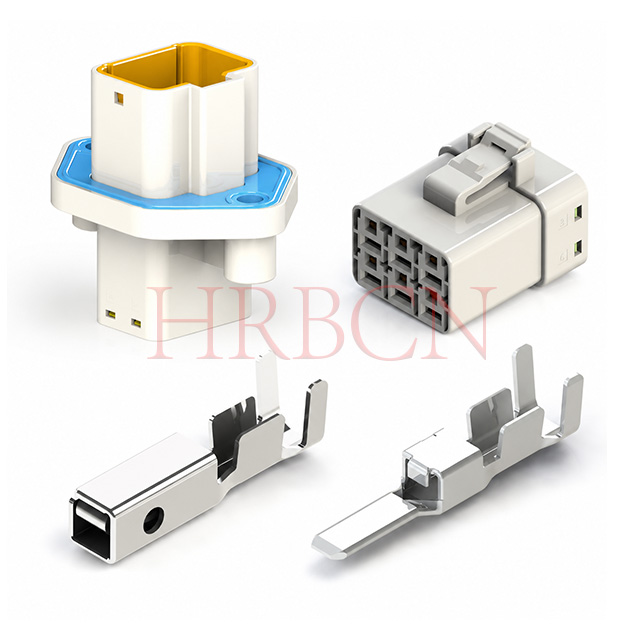
Waterproof Connector Installation Best Practices
Cable Gland and Seal Compatibility
A waterproof system is only as strong as its weakest ingress point, which is frequently the cable entry gland. The internal rubber seal of the gland must perfectly match the outer diameter of the cable jacket. If the cable is too thin, the gland cannot compress enough to form a watertight barrier. If the cable is too thick, the seal tears or deforms during assembly, creating an immediate leak path.
Installers consider the shape and material of the cable jacket. Flat cables or heavily textured jackets require specialized glands. Standard round seals leave microscopic gaps against an irregular cable surface. Furthermore, the cable must be properly supported and provided with adequate strain relief. If a heavy cable hangs directly from the housing, the lateral tension eventually warps the internal seals and causes a leak.
Proper Mating Torque
Human error during installation is a leading cause of field failures. Hand-tightening threaded couplings is highly subjective and rarely achieves the exact compression required for an IP67 or IP68 rating. Under-tightening leaves the O-ring loose, allowing water to bypass the seal. Over-tightening crushes and permanently deforms the O-ring, destroying its ability to expand and contract with temperature changes.
Standardizing installation procedures is mandatory for reliable field deployment. Technicians follow strict protocols to ensure every connection is seated correctly.
Inspect all O-rings and gaskets for debris, tears, or manufacturing defects before assembly.
Verify the cable outer diameter matches the specified range of the cable gland seal.
Strip the cable jacket to the exact length specified by the manufacturer to prevent internal bunching.
Seat the contacts fully into the housing until the locking mechanism clicks into place.
Use a calibrated torque wrench to apply the exact mating force specified by the manufacturer on all threaded components.
Apply external strain relief to the cable within six inches of the connector to prevent lateral stress on the seal.
Conclusion
For projects requiring reliable connector performance across industrial, automotive, and energy storage applications, working with an experienced connector manufacturer can also help simplify product selection and customized development. Shenzhen Haiyuncheng Electronics, established in 2010 and operating under the HRB brand, specializes in the R&D, production, and sales of electrical connectors and offers more than 2,000 product series for a wide range of connectivity applications.
Audit your site's environmental baseline to identify secondary threats like UV exposure, chemical washdowns, or salt fog before selecting materials.
Request specific testing data from manufacturers for any IP68 claims to verify the exact depth and duration limits match your deployment needs.
Calculate thermal derating margins based on the enclosed operating environment to prevent heat-induced electrical failures.
Implement strict field installation protocols requiring calibrated torque tools to ensure consistent, reliable seal integrity across all connections.
FAQ
Q: What is the difference between IP67 and IP68?
A: IP67 protects against temporary submersion in water up to 1 meter deep for 30 minutes. IP68 protects against continuous submersion, but the exact depth and duration limits are defined by the manufacturer. You must always verify the specific IP68 testing parameters before deployment.
Q: Can a waterproof connector be used underwater permanently?
A: Only if it carries a specific IP68 rating designed for permanent submersion at your required depth. Standard IP67 components will eventually fail underwater. Always consult the manufacturer's technical data sheet for continuous immersion limits.
Q: Why do waterproof connectors overheat?
A: Airtight waterproof housings restrict natural heat dissipation. As electrical current flows, resistance generates heat. If this heat cannot escape, the internal temperature rises rapidly. You must apply thermal derating calculations to ensure the current load matches the ambient temperature conditions.
Q: What materials are best for outdoor UV exposure?
A: UV-stabilized polycarbonate, specialized outdoor-rated nylon, and coated metal alloys are the best choices. Standard plastics become brittle, crack, and lose their waterproof integrity when exposed to prolonged sunlight and weather cycling.
Q: How does a panel mount connector maintain its waterproof rating?
A: It relies on a perimeter gasket compressed between the connector body and the enclosure wall. The mounting nut must be tightened to a specific torque to ensure proper compression without deforming the seal or warping the panel.
Q: Are field-installable connectors as reliable as factory-molded ones?
A: Factory-molded cables generally offer superior, guaranteed seal integrity because they eliminate human error. Field-installable options are highly reliable if assembled correctly, but they depend entirely on the technician using the correct cable diameter and mating torque.


